
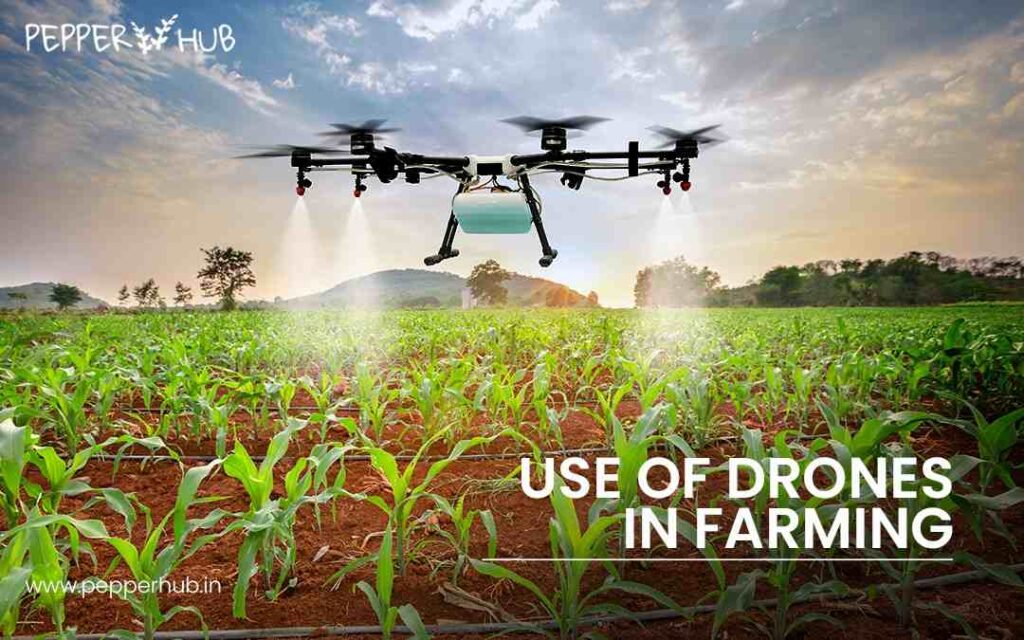
Drones have been increasingly utilized in farming, revolutionizing traditional agricultural practices. Their versatility, cost-effectiveness, and ability to collect vast amounts of data make them valuable tools for modern farmers. Here are some of the primary uses of drones in farming.
In the current status of Indian farmers, the need for drones in farming is critical to address various challenges and improve agricultural practices. India’s agriculture sector faces issues like fragmented landholdings, labor shortages, and unpredictable weather patterns. Drones can efficiently cover vast areas of farmland, providing real-time data on crop health, soil conditions, and water availability. This data-driven approach enables precision agriculture, helping farmers optimize resource usage, reduce input costs, and increase yields. Drones can also aid in early pest and disease detection, enabling timely interventions and minimizing crop losses. With the ability to access remote or inaccessible areas, drones can bridge the information gap and empower farmers with actionable insights for better farm management. Embracing drone technology can enhance the livelihoods of Indian farmers, making agriculture more sustainable, resilient, and economically viable.

Benefits of using Drones
Drones offer numerous benefits in farming, transforming traditional agricultural practices. They enable efficient crop monitoring by capturing high-resolution images and data, facilitating early detection of pest infestations and diseases, leading to timely interventions. With precision agriculture, drones can target specific areas with fertilizers and pesticides, minimizing waste and optimizing yields. Drones can also automate planting and seeding, ensuring precise distribution of seeds over large areas. By assessing crop health through multispectral or hyperspectral cameras, farmers can implement targeted treatments for healthier plants.
Cost and durability of drones
The cost and durability of drones for farming vary depending on factors such as drone type, features, and brand. Generally, agricultural drones equipped with specialized sensors and cameras are more expensive than consumer-grade drones. While the initial investment might seem substantial, the potential benefits in terms of precision agriculture, improved crop management, and increased yields can make drones a valuable and cost-effective tool for Indian farmers in the long run. Additionally, some manufacturers and government schemes may offer subsidies or incentives to encourage the adoption of drone technology in agriculture, further making them more accessible to farmers.
Difference between traditional farming and the use of drones
Traditional farming relies on manual labor and conventional methods passed down through generations. Farmers make decisions based on their experience, observations, and limited data. In contrast, the use of drones in farming represents a technologically advanced approach. Drones equipped with sensors, cameras, and GPS can collect real-time data on crop health, soil conditions, and weather patterns, enabling precision agriculture. This data-driven approach allows for targeted interventions, such as precise application of water, fertilizers, and pesticides, reducing resource wastage and increasing yields. Drones provide efficiency in monitoring large areas, early detection of pest or disease outbreaks, and access to remote or inaccessible terrains. The incorporation of drones in farming fosters sustainable practices, optimizing resource usage while enhancing overall productivity and farm management.

Drones come equipped with a range of features, including multi-spectral and photo cameras, making them versatile tools in the agriculture sector. They find applications in various areas such as monitoring crop stress, predicting yields, and delivering resources like herbicides, fertilizers, and water. Drones are valuable for assessing vegetation health, identifying weed-infested areas, infections, and pests. By analyzing this data, farmers can determine the precise amounts of chemicals required to combat these issues, optimizing costs. Moreover, some start-ups have developed drone planting systems that can shoot seed pods and spray nutrients into the soil, improving crop management consistency and efficiency while reducing expenses.