
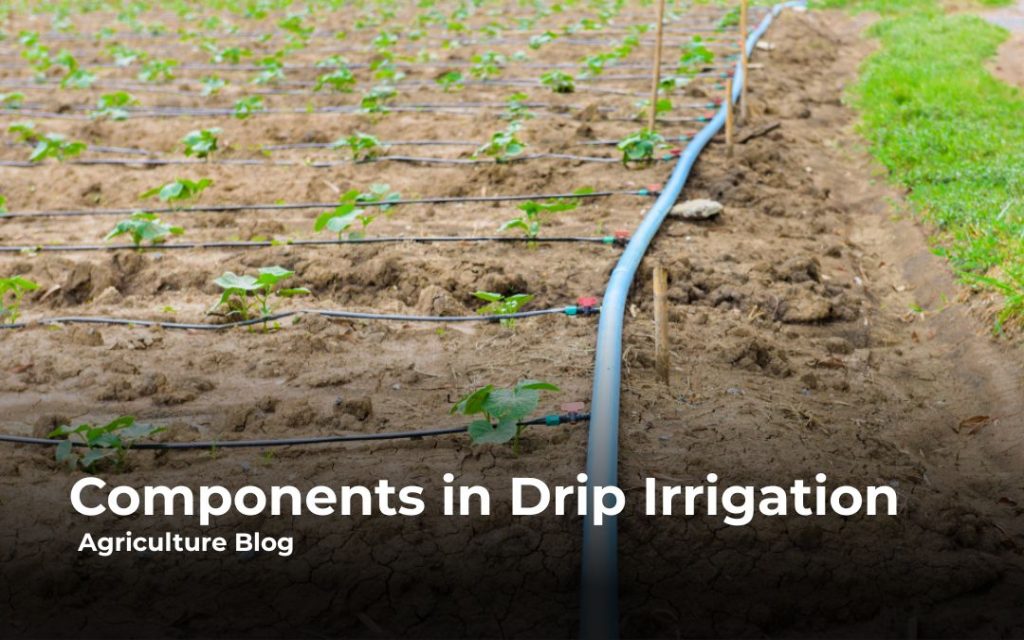
There is never a “one size fits all” approach to irrigation system setup. Drip irrigation systems can consist of a wide range of potential parts. Drip systems also come in a variety of forms. You will want to use different portions depending on why you are utilizing this water-saving irrigation technique. I’ll group the different kinds of components based on their intended usage.
Mainline Tubing
The flexible, low-density polyethylene tubing that forms the basis of a drip system is called mainline tubing. The most common size of mainline tubing is 1/2-inch, but larger sizes, such as 3/4-inch, are available if the watering needs (and water supply) of the plants you are growing call for a larger size. Mainline tubing can be run hundreds of feet from the faucet to the far reaches of your yard; it can be laid out in a straight line, along a fence, in a flower bed, or around trees and bushes. When necessary, emitters or sprayers can be punched into this robust yet flexible tubing.
Easy Loc Fittings
An easy method to provide your system the most design freedom is with Easy Loc connectors. All of the styles you require to manage and guide the flow to your desired location will be available. The primary advantages of these fittings are their dependability and simplicity of use. There are around 20 styles available for these fittings. Naturally, you can decide what best fits your requirements and preferences. However, the “T,” the coupler, and the female swivel hose start are the ones that are often utilized in most systems. The 90-Degree Elbow, Full Port Inline Valve, and Male Hose End with Cap are all quite popular.
Drip Tape
For raised beds and row crops, drip tape is ideal. If you drive through the Central Valley of California, you’ll see that drip tape is mostly used to water commercial row crops.
Here are a few explanations:
Watering raised beds and row crops in an economical and efficient manner
Excellent clog resistance, homogeneity, and watering efficiency
Perfect for buried, mulched, or above-ground applications
Excellent for systems with low pressure; operates as low as four psi.
Only 155 mesh filters are needed.
usually lasts two to five years above ground, when the sun and weather will take their toll; if buried, it can last up to seven years.
1/2” Emitter Tubing
Pressure-compensating emitters are factory-installed inside this 1/2-inch tube at intervals of nine, twelve, twenty-four, or thirty-six inches. It can water evenly around trees, up and down hills, and over great distances. Your system’s installation time is significantly decreased with emitter tubing. Large cannabis plants, ornaments, shrubs, and fruit trees all benefit well from this kind of tubing. It is long-lasting and ideal for planting along lengthy fence lines or in landscaping settings. This product works best at pressures between 10 and 50 psi.
Soaker Dripline
This kind of dripline is created in the United States for consistent quality and is perfect for small to medium-sized garden beds or containers. Emitters are factory-installed every six, nine, or twelve inches on the 1/4-inch diameter tubing. This tiny tubing is simple to use and flexible. It provides uniform water delivery at pressures as high as 30 psi and as low as 2 psi.
Emitters
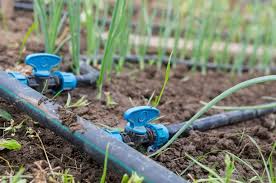
The most well-known and frequently utilized part of a drip system is the drip emitters. Emitters come in a wide variety of brands and types. Emitters can be categorized into two groups to help you choose:
1. Emitters that do not compensate for pressure
With this kind of emitter, the flow from each emitter will increase with the water pressure coming from your faucet or valve.
2. Emitters that compensate for pressure
For long-distance drip irrigation systems, these are perfect for distributing water evenly. When dealing with uneven or mountainous terrain, or when planting in lengthy rows, they are an excellent option.
Sprayers
Sprayers will release a lot more water over a wider area than emitters when more water is required for thirsty, fast-growing plants, a larger flower garden, or ground cover. For lawns and other comparable applications, sprayers are an obvious choice. There are pressure-compensating sprayers, directed sprayers, non-adjustable sprayers, and adjustable circular sprayers.
Filters
Debris and sediment that can block a drip system are removed using screen filters. Home garden filters are frequently used by backyard gardens to prevent blocked emitters or sprayers. Larger filters with stainless steel screens are available for more difficult jobs. The best-designed filters are these ones. They are designed to endure tremendous pressure all the time. An easy-to-clean disc filter is the best option if your water comes from a live body of water, like a river, stream, or pond that contains algae or other organic materials.