
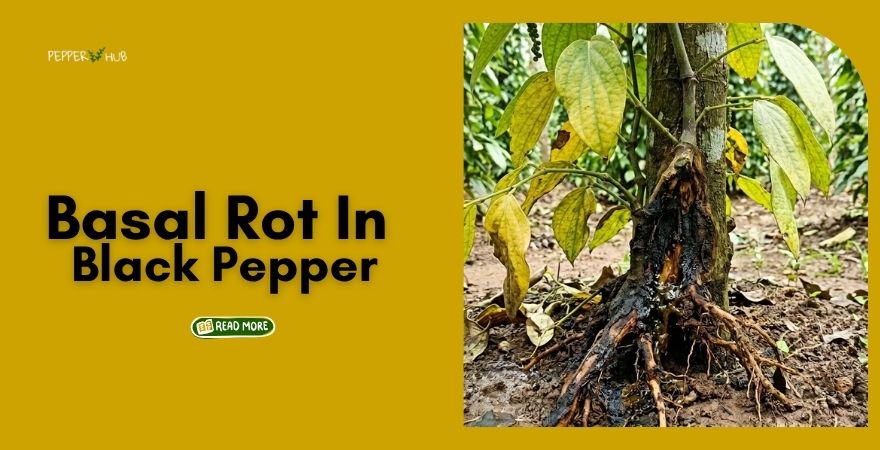
Black pepper, often called the “King of Spices,” is a staple in kitchens worldwide. But for farmers, there is a shadow that looms over the vineyard: Basal Rot. Also known as Foot Rot or Phytophthora foot rot, this disease is the most devastating threat to black pepper cultivation, capable of wiping out entire plantations during a single monsoon season.
If you’re a grower or a spice enthusiast, understanding this “silent killer” is the first step toward protecting your vines.
What is Basal Rot?
Basal rot is caused by the soil-borne oomycete pathogen Phytophthora capsici. Unlike many pests that attack the leaves first, this pathogen strikes at the very foundation of the plant—the roots and the collar (the base of the stem).
The disease thrives in high humidity and saturated soil, making the peak of the rainy season the danger zone for pepper vines.
Identifying the Symptoms
The tricky part about Basal rot is that by the time you see the signs above ground, it might already be too late. Here is what to look for:
- Leaf Yellowing and Flaccidity: The leaves lose their luster, turn a dull yellow, and begin to droop.
- Rapid Defoliation: Within days of the first symptoms, the vine may shed its leaves and spikes entirely.
- Collar Rot: This is the tell-tale sign. If you examine the base of the stem at the soil line, you’ll find dark, slimy, water-soaked lesions. The bark may peel away easily, revealing blackened internal tissues.
- Root Decay: The feeder roots turn black and brittle, losing their ability to take up water and nutrients.
The “Sudden Death” Effect: In its most virulent form, a healthy-looking vine can completely collapse and die within 10 to 14 days of infection.

How it Spreads
The pathogen produces “zoospores” that can literally swim through soil water or be splashed onto the plant by heavy raindrops. Factors that accelerate the spread include:
- Poor soil drainage.
- Overcrowding of vines.
- Movement of contaminated soil or farm tools.
- Injuries to the roots or collar during weeding.
Management and Prevention
Because Phytophthora is so aggressive, prevention is much more effective than a cure.
- Cultural Practices
- Improve Drainage: Ensure water never stagnates around the base of the vine. Use raised mounds for planting.
- Phytosanitation: Remove and burn infected vines immediately. Do not compost them, as the pathogen can survive in the soil for years.
- Minimal Disturbance: Avoid digging near the collar region during the rainy season to prevent root injuries.
- Biological Control
- Trichoderma harzianum: This beneficial fungus is a natural enemy of Basal rot. Applying Trichoderma-enriched organic manure to the base of the vines before the monsoon can create a protective shield.
- Chemical Intervention
When the rains start, many farmers apply a “Bordeaux mixture” (1%) as a soil drench around the base and a foliar spray. Modern systemic fungicides like Metalaxyl-Mancozeb are also highly effective if applied early enough.
Basal rot is a formidable foe, but it isn’t invincible. Success in managing it boils down to vigilance and timing. By ensuring your soil stays well-drained and applying preventive treatments before the heavy rains hit, you can keep your “Black Gold” thriving for years to come.
Are you seeing yellowing in your vines this season? Don’t wait—check the collar today!
Read more Black peppper Blogs