
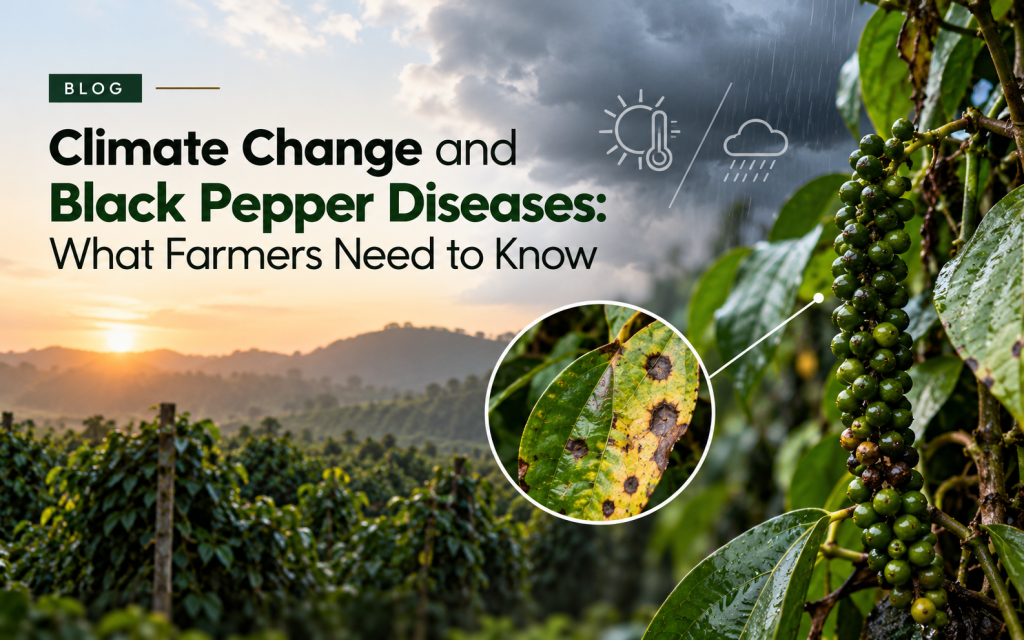
Black pepper, known as the King of Spices, grows well in warm, humid conditions. But changes in weather are creating new challenges for pepper farmers.
Heavy rainfall, long dry periods, rising temperatures and unexpected showers can affect the health of pepper vines and increase the risk of diseases.
Understanding how weather affects pepper plants can help farmers identify problems early and protect their crops.
How Does Climate Change Affect Black Pepper?
1. Heavy Rainfall
Heavy rain can cause water to collect around the roots of pepper vines. This creates favourable conditions for root diseases, especially quick wilt or foot rot.
2. High Temperatures and Dry Spells
Long periods without rain can dry out the soil and weaken pepper vines. Stressed plants may become more vulnerable to pests and diseases.
3. Changes in Humidity
High humidity and unexpected rainfall can encourage fungal diseases. These may damage leaves, affect pepper spikes and reduce yield.
Common Black Pepper Diseases
1. Quick Wilt or Foot Rot
Quick wilt is one of the serious diseases affecting black pepper. It is caused by Phytophthora species and often becomes a problem during periods of heavy rainfall.
Symptoms to watch for:
- Leaves turning yellow and falling off.
- Black or dark patches near the base of the vine.
- Pepper spikes dropping before maturity.
- Sudden wilting and collapse of the vine.
How to manage it:
- Make sure excess rainwater drains away from the roots.
- Avoid waterlogging around the vines.
- Use healthy planting materials.
- Consult an agricultural expert about suitable disease-control measures.
2. Slow Decline
Slow decline develops gradually and may be associated with root damage, nematodes and other soil-borne pathogens. Dry weather and poor soil conditions can add stress to affected vines.
Symptoms to watch for:
- Leaves gradually turning yellow.
- Reduced growth and fewer pepper spikes.
- Weak roots and declining plant health.
How to manage it:
- Add well-decomposed organic matter to improve soil health.
- Use mulch to conserve soil moisture.
- Maintain proper drainage, even during dry periods.
- Get the roots checked to identify the actual cause before treatment.
3. Anthracnose and Pollu-Related Problems
Wet weather and high humidity can encourage fungal infections that damage pepper leaves, spikes and berries. Pollu disease can also cause pepper berries to become hollow or poorly developed.
Symptoms to watch for:
- Brown or dark spots on leaves.
- Pepper spikes drying up or dropping.
- Damaged, discoloured or hollow berries.
How to manage it:
- Maintain good airflow around the vines.
- Manage shade to avoid excessive humidity.
- Remove badly affected plant parts where appropriate.
- Seek advice on suitable treatments based on the disease identified.
4. Piper Yellow Mottle Virus
This viral disease can affect the growth and productivity of pepper vines. Infected plants may show yellow patterns on their leaves and reduced growth.
Symptoms to watch for:
- Yellow mottling on leaves.
- Crinkled or distorted leaves.
- Stunted growth.
- Reduced pepper production.
How to manage it:
- Use healthy planting materials from reliable nurseries.
- Monitor plants for possible insect vectors.
- Get suspected infections identified by an agricultural expert before deciding on control measures.
Quick Wilt vs. Slow Decline
| Feature | Quick Wilt | Slow Decline |
| Common conditions | Heavy rain and waterlogging | Root damage, nematodes and other soil problems |
| Speed | Can develop rapidly | Usually develops gradually |
| Main signs | Sudden wilting and leaf fall | Yellowing and reduced growth |
| Key action | Improve drainage and seek early treatment | Check root health and improve soil conditions |
Climate-Smart Practices for Pepper Farmers
Farmers can take a few practical steps to reduce weather-related risks.
- Improve drainage: Ensure excess rainwater flows away from the root zone, particularly before the monsoon.
- Use mulch: Organic mulch helps conserve moisture during dry spells. Keep it managed so it does not trap excess moisture against the vine base.
- Manage shade: Maintain suitable shade and airflow according to local growing conditions.
- Improve soil health: Use well-decomposed compost and other locally recommended soil-improvement practices.
- Choose healthy planting materials: Select suitable varieties and disease-free plants recommended by agricultural research institutions.
- Inspect vines regularly: Early detection can help prevent a disease from spreading throughout the plantation.
Climate change is making black pepper farming more challenging, but good farm management can help reduce some of the risks.
Regular monitoring, healthy soil, proper drainage and early disease identification are important steps in protecting pepper vines and maintaining yield.
Growing black pepper successfully starts with understanding your plants, your soil and your local weather conditions.
Note: Similar symptoms can have different causes. Farmers should consult a local agricultural officer or plant pathologist for diagnosis and recommendations on suitable treatments.