
Vanilla (Vanilla planifolia) is one of the world’s most prized and lucrative spices. Belonging to the orchid family, vanilla is a tropical climbing vine that thrives under shade and requires dedicated care, particularly during pollination and curing.
Whether you are looking to intercrop vanilla in your coconut, arecanut, or black pepper farm, or setting up a dedicated shaded plot, this step-by-step guide covers everything you need to know about growing high-quality vanilla beans.
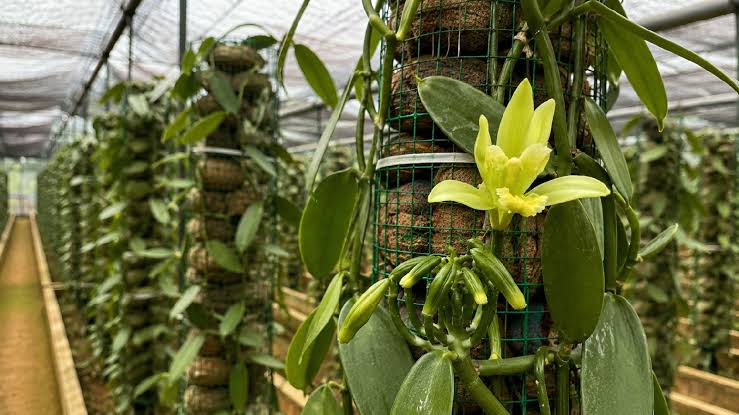
1. Agro-Climatic Requirements & Best Time to Plant
- Climate & Temperature: Warm, humid tropical climate with temperatures between 21°C and 32°C.
- Rainfall: 150 to 300 cm annually, followed by a dry season of 2 to 3 months to trigger flowering.
- Soil: Well-drained, fertile soil rich in organic matter (loamy to sandy loam soils with a pH of 6.0 to 6.5).
- Shade Requirements: Vanilla is an orchid vine and requires 50% to 60% partial shade. Direct harsh sunlight will scorch the vines.
- Best Planting Time: The ideal time for planting support standards and vine cuttings is during the onset of the monsoon (June to August).
2. Step-by-Step Planting Process
Step 1: Planting Support Standards (Live Trees or Trellises)
Since vanilla is a climber, it requires support trees (standards) to grow upon.
- Live Standards: Trees like Glyricidia sepium, Plumeria, Jatropha, or silver oak make excellent live supports. You can also intercrop vanilla on established arecanut or coconut palms.
- Spacing: Plant live standards at a spacing of 2.5 m x 2.5 m or 2 m x 2 m about 3 to 6 months before planting vanilla vines, so they establish adequate shade and support.
Step 2: Preparing Vine Cuttings
- Use healthy, vigorous stem cuttings that are 1 to 1.5 meters (8 to 12 nodes) long. Longer cuttings root faster and flower earlier than shorter ones.
- Remove 2 to 3 leaves from the bottom section (base) of the cutting that will be placed under the soil/mulch.
- Let the cut ends dry in the shade for 2 to 3 days before planting to prevent stem rot.
Step 3: Planting the Vines
- Dig a shallow trench or pit near the base of the support tree.
- Place the bottom bare nodes (2–3 nodes) horizontally on top of the soil and cover them lightly with a thin layer of topsoil and rich organic mulch (decomposed leaf mold). Do not plant too deeply to prevent rot.
- Tie the upper part of the vine gently to the support tree using natural jute string.
- Keep the base lightly moist, but never waterlogged.
3. Manures, Fertilizers, and Nutrition Management
Vanilla roots are shallow and feed primarily from decomposing mulch and topsoil.
- Organic Manure:
- Apply 5 to 10 kg of well-decomposed Farmyard Manure (FYM) or Vermicompost per plant annually.
- Maintain a thick, continuous layer of organic leaf mulch around the base of the vine. Mulching is critical as it protects the root system, retains moisture, and provides organic nutrients.
- Bio-fertilizers & Supplements:
- Trichoderma harzianum: Mix Trichoderma enriched FYM/compost near the root zone once or twice a year (before monsoons) to prevent fungal root rot.
- Foliar Nutrition: Spraying 1% NPK (17:17:17 or 19:19:19) solution diluted in water on the foliage once a month during active growth promotes healthy leaf and stem development.
4. Vine Training and Hand Pollination
Vine Training
- Allow the vine to grow up to a reachable height (around 1.5 meters).
- Loop or bend the vine downward over horizontal bamboo branches or support bars and allow it to trail back to the ground or coil back up. Bending the vine triggers hormonal changes that encourage flowering.
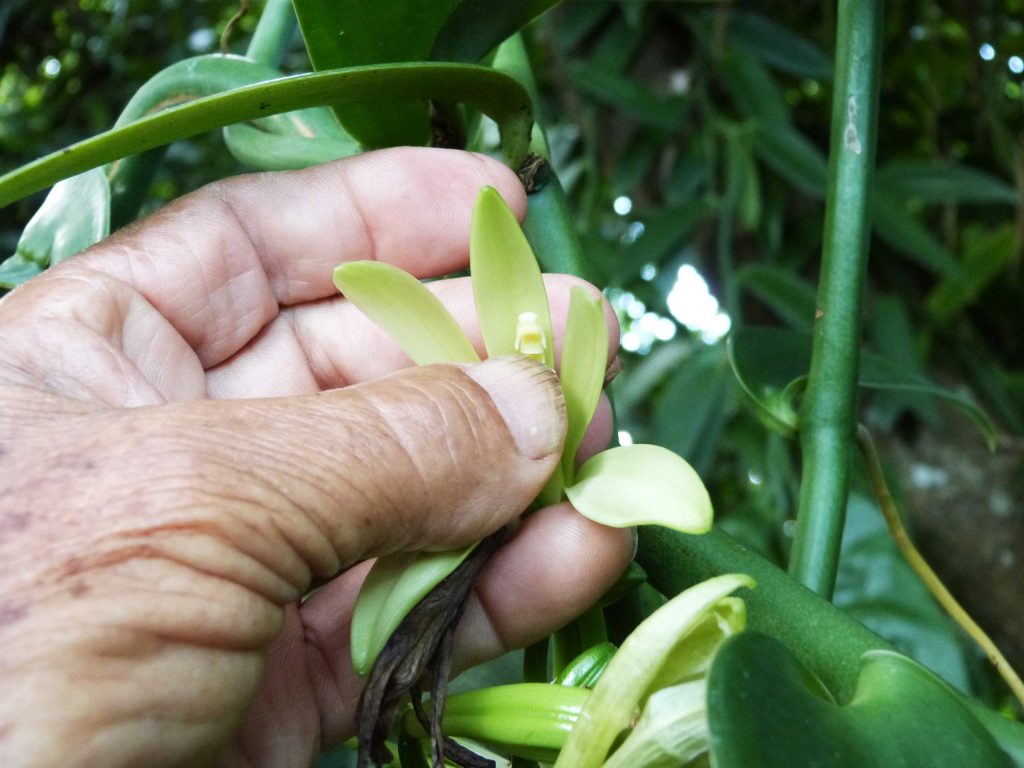
Hand Pollination (The Key Step!) - Flowering Season: Vanilla flowers usually bloom between December and February/March after a dry spell.
- Hand Pollination Requirement: Vanilla flowers open early in the morning and remain receptive for only a few hours on a single day. Natural pollinators are absent in most regions, so hand pollination is mandatory.
- Method: Using a small toothpick or bamboo needle, lift the flap (rostellum) separating the stigma and anther inside the flower, and gently press the anther against the stigma with your thumb. A skilled farmer can pollinate 1,000 to 1,500 flowers a day!
Timeline: Yielding, Harvesting, and Curing
| Stage | Timeline |
|---|---|
| First Flowering | 3 years after planting (using 1.5m cuttings) |
| Peak Yielding Period | 4th to 8th year |
| Bean Maturity / Harvest Time | 8 to 9 months after successful pollination |
| Harvesting the Beans |
- Green vanilla pods mature 8 to 9 months after pollination (August to October).
- Harvest the pods when the bottom tips begin to turn pale yellow. Do not pick them prematurely while completely green, as immature beans lack vanillin content.
- Harvest individual pods by snapping them carefully from the cluster.
5. Pest and Disease Management
Stem & Root Rot (Fusarium / Phytophthora): Caused by excess waterlogging or bruised roots.
- Prevention: Ensure excellent drainage, avoid heavy foot traffic near the root zone, and apply Trichoderma-enriched manure.
- Sun Scorch: Ensure 50% to 60% uniform shade throughout the year, especially during peak summer months.
Summary Checklist for Farmers
- Plant Support: 3–6 months prior to planting vines.
- Plant Cuttings: June–August during the rainy season.
- Daily Pollination: December–March early morning hours.
- Harvest Beans: 8–9 months after pollination when tips turn pale yellow.