
Honey cultivation, also known as beekeeping or apiculture, is not only a time-honored tradition but also a sustainable and lucrative agricultural practice. Beyond the golden sweetness of honey, beekeeping offers various bee products, contributes to pollination, and supports biodiversity. In this comprehensive guide, we’ll explore the fascinating world of honey cultivation, including the collection of honey, its significance in economy and ecosystem.
Collection of Honey
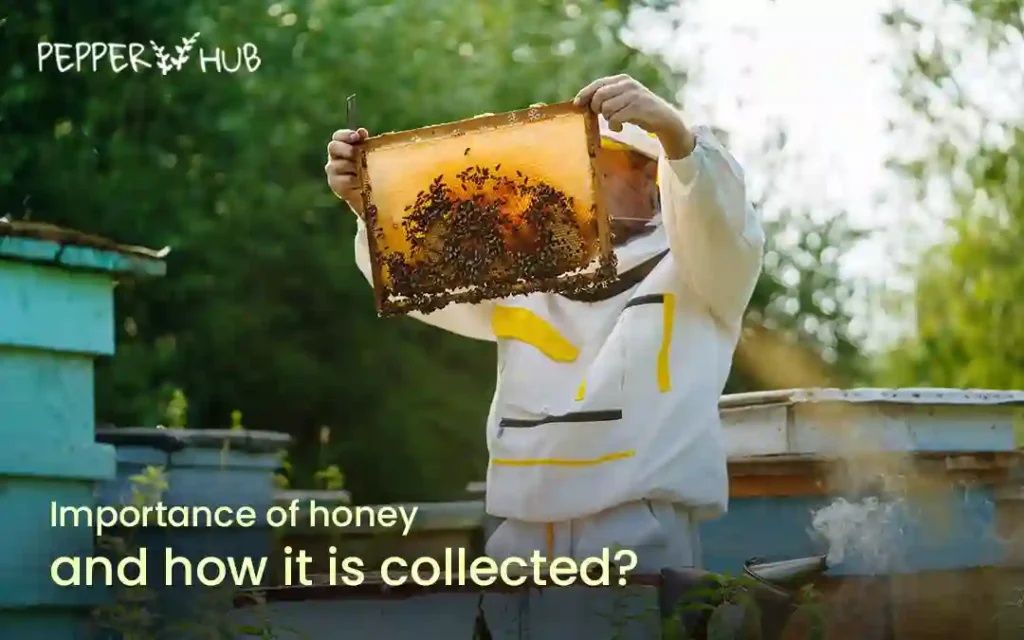
Honey collection involves several key steps. Beekeepers begin by inspecting their beehives to ensure the colonies’ health and the readiness of honey for harvest. Timing is crucial, as honey should be collected when most of the cells are capped( a white cap of wax). It signifies that your honey is ready to harvest. Beekeepers then employ a smoker to calm the bees, making the process safer. Honey supers, frames containing capped honeycombs, are removed from the hive. Remember to leave enough honey for your bees to feed them through the winter.
In a honey house, tools such as uncapping knives and honey extractors are used to separate honey from the wax combs. The extracted honey is strained to remove impurities, after which it is bottled in clean, airtight containers for storage, maintaining its quality and flavor. This meticulous process ensures the successful collection of honey, also known as “liquid gold.”


Significance Of Honey
It serves as a valuable source of income for individuals and communities while playing a pivotal role in global agriculture by providing essential pollination services that increase crop yields and quality. Beekeepers contribute to biodiversity conservation by creating suitable habitats for bees, thereby promoting overall ecosystem health.
Economic Importance Of Honey
Additionally, beekeeping encourages sustainable land management practices and environmental stewardship, as it relies on the preservation of natural forage areas and the avoidance of harmful pesticides. The production of honey and other bee products not only supports economic livelihoods but also underscores the critical role of bees in sustaining agriculture and the environment.
Honey by-products, including beeswax, royal jelly, propolis, and bee pollen, hold significant potential within the apiculture industry. These secondary products diversify a beekeeper’s income streams and enhance the overall economic viability of beekeeping operations. Beeswax is utilized in cosmetics, candles, and pharmaceuticals, while royal jelly and bee pollen are sought-after nutritional supplements. Propolis, known for its antimicrobial properties, finds applications in health and wellness products. The scope of honey by-products is expanding as consumers increasingly value natural and sustainable alternatives, presenting opportunities for beekeepers to capitalize on this demand and further establish the apiculture sector as a versatile and economically sustainable endeavor.
By promoting beekeeping as more than just a source of honey, the mission envisions a future where bees and humans coexist harmoniously, contributing to the well-being of ecosystems and communities alike. As the sweet revolution continues to unfold, the National Beekeeping and Honey Mission (NBHM) paves the way for a more resilient and interconnected world.