
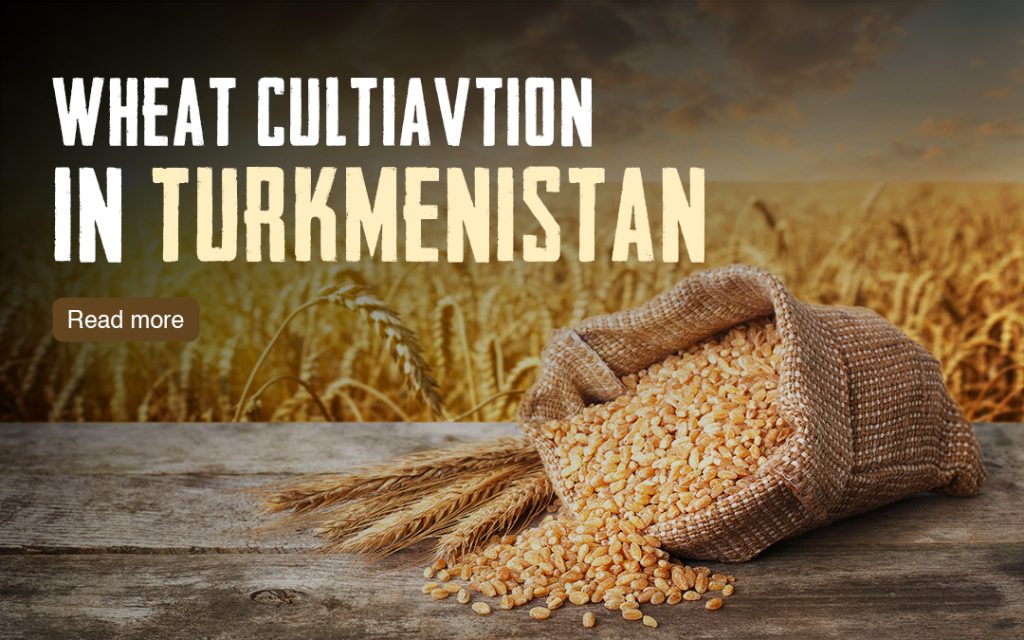
Turkmenistan, a nation where the golden fields of “Ak Bugdai” (white wheat) are a symbol of national prosperity, has transformed into a self-sufficient grain producer. Despite the arid Karakum Desert covering 80% of its territory, strategic irrigation and resilient local varieties have made wheat a cornerstone of the economy.
1. Understanding the Climate & Varieties
Wheat in Turkmenistan is primarily winter wheat. The growing cycle typically lasts between 200 to 210 days. Because the region faces extreme heat and frost, scientists have developed specialized high-yielding varieties like:
- Sähraýy and Ýolöten-3: Popular for their adaptability.
- Davlatli: A newer variety resistant to salinity, drought, and frost.
- Turkmenistan and Bitarap-25: Modern breeds with high gluten (32–34%) and protein content.
2. Soil Preparation (August – September)
Preparation starts mid-summer to ensure the desert soil is ready to receive life.
- Plowing: Deep plowing is essential to break the soil crust.
- Fertilization: Basal doses of phosphorus (around 200 kg/ha of superphosphate) are often applied during this phase to support root development.
- Salinity Management: Since many Turkmen soils are saline, specialized “leaching” or heavy initial watering may be used to wash salts away from the root zone.
3. Sowing the Seeds (September)
The official sowing season usually begins in early September.
- The Baton: Traditionally, the “aksakals” (village elders) throw the first seeds, a symbolic gesture of blessing.
- Precision Sowing: Using modern machinery like John Deere or CLAAS tractors, seeds are sown at a density of roughly 4.5 to 5 million seeds per hectare.
- Depth: Seeds are planted at a depth of 4–6 cm to protect them from the fluctuating autumn temperatures.
4. Strategic Irrigation & Management
In an arid climate, water is gold. Turkmenistan’s wheat is 100% dependent on irrigation, primarily from the Amu Darya River.
- Methods: While traditional surface irrigation is common, the country is moving toward sprinkling and drip irrigation to save up to 35% more water.
- Critical Stages: Watering is vital during:
- Germination: To ensure seedling emergence.
- Tillering: When the plant develops side shoots.
- Jointing & Heading: When the wheat “ear” begins to form.
5. Fertilization & Pest Control
During the spring (March–April), top-dressing is applied.
- Nitrogen (Urea): Applied at a rate of roughly 250 kg/ha to boost growth during the “stem extension” phase.
- Pest Monitoring: Farmers watch for rust (yellow and brown) and powdery mildew, though many modern Turkmen varieties are bred for natural resistance.
6. The Golden Harvest (June)
The harvest campaign is a nationwide event that starts in early June, beginning in the warmer Ahal, Mary, and Lebap regions, then moving to Dashoguz and Balkan.
- Maturity Check: Wheat is ready when the moisture content drops to approximately 12–14%.
- Mechanization: Over 2,000 combine harvesters work around the clock to ensure the grain is collected before the peak summer heat can damage the quality.
Crop rotation with legumes (like mung beans) is increasingly used in Turkmenistan to naturally replenish soil nitrogen and improve the next year’s wheat yield. The success of wheat cultivation in Turkmenistan is more than just an agricultural achievement; it is a testament to the nation’s resilience and its strategic embrace of modern agrotechnology. By blending ancestral traditions with high-tech irrigation and climate-hardy seed varieties, Turkmenistan has secured its food independence despite its challenging desert landscape. As the country continues to invest in sustainable farming practices and digital land management, the “Ak Bugdai” will remain the heartbeat of the Turkmen economy, ensuring that the golden fields continue to provide for generations to come.