
Strawberry cultivation in Greenland is a unique example of how modern agricultural techniques can overcome extreme climatic challenges. Although Greenland has a harsh, cold environment with a very short growing season, strawberries can be successfully grown using greenhouse and protected cultivation methods. With proper climate control, variety selection, and management practices, high-quality strawberries can be produced even in Arctic regions.
Climate Conditions in Greenland for Strawberry Cultivation
Greenland experiences long, freezing winters and short, cool summers. Outdoor strawberry farming is not practical due to frost risk and low soil temperatures. However, extended daylight hours during summer provide a natural advantage for plant growth. To utilize this benefit while protecting plants from cold stress, greenhouse cultivation becomes essential.
Suitable Strawberry Varieties for Cold Regions
For Greenland conditions, strawberry varieties that tolerate low temperatures and mature quickly are preferred. Day-neutral and everbearing varieties perform especially well in greenhouses. These varieties ensure continuous flowering and fruiting under controlled environments.
Greenland has:
- Very cold winters
- Short, cool summers
- Long daylight hours during summer (midnight sun)
Because of this, open-field cultivation is risky, and greenhouse farming is the most reliable method.
Choosing the Right Strawberry Variety
Select cold-tolerant and short-season varieties such as:
- Albion
- Honeoye
- Seascape
- Elsanta
These varieties adapt well to cooler temperatures and perform better under controlled conditions.
Greenhouse Preparation
A greenhouse is essential for strawberry cultivation in Greenland.
Greenhouse cultivation is essential for strawberry farming in Greenland because the region’s natural climate is extremely cold, unpredictable, and unsuitable for open-field strawberry growth. Strawberries are sensitive plants that require stable temperatures, protection from frost, and a controlled growing environment to produce quality fruits. In Greenland, greenhouses create a protective barrier against harsh winds, snowfall, and sudden temperature drops, allowing farmers to maintain optimal daytime temperatures of around 18–22°C and safe nighttime temperatures above 10°C.
They also help regulate humidity levels, which is crucial in preventing fungal diseases commonly associated with cold and damp conditions. Another major advantage of greenhouse cultivation is the ability to make full use of Greenland’s long summer daylight hours while shielding plants from cold soil and frost damage. Raised beds or grow bags inside greenhouses further improve root insulation, drainage, and nutrient control. Additionally, greenhouses enable precise irrigation and fertilization through drip systems, reduce pest pressure, and allow controlled pollination, resulting in higher yields, better fruit shape, improved sweetness, and extended harvesting periods. Overall, greenhouse systems transform Greenland’s challenging climate into a suitable environment for successful and sustainable strawberry cultivation.
Key requirements:
- Polyhouse or glass greenhouse
- Temperature control (15–25°C ideal)
- Proper ventilation
- Supplemental lighting if sunlight is insufficient early in the season
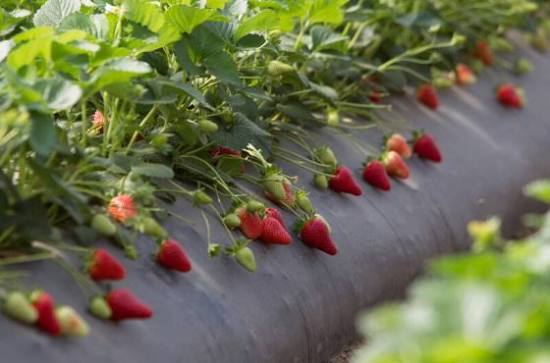
Raised beds or grow bags work best for insulation and drainage.
Soil and Growing Medium for strawberry cultivation in Greenland
Use a light, well-drained, and nutrient-rich medium. Strawberries require a light, well-drained growing medium rich in organic matter. A mixture of loamy soil or cocopeat with compost and sand or perlite works well. Maintaining a soil pH between 5.5 and 6.5 is important for nutrient uptake. Sterilized soil or soilless media is recommended to minimize disease problems in greenhouse conditions.
Ideal mix:
- Loamy soil or cocopeat
- Well-decomposed compost
- Perlite or sand for drainage
Soil pH should be between 5.5 and 6.5.
Planting Method and Spacing
Healthy, disease-free runners should be selected for planting. The crowns must be placed just above the soil surface to prevent rot. Plants should be spaced about 25–30 cm apart to ensure proper air circulation and sunlight exposure. Planting is usually done in late spring when greenhouse temperatures are stable.
- Plant certified disease-free runners or saplings
- Spacing: 25–30 cm between plants
- Plant crowns should be just above soil level
- Best planting time: Late spring (inside greenhouse)
Water immediately after planting.
Temperature and Light Management
- Day temperature: 18–22°C
- Night temperature: 10–15°C
- Ensure 12–14 hours of light daily
- Use grow lights during low-light periods
Good airflow prevents fungal diseases.
Irrigation and Fertilization
Drip irrigation is the most effective method for strawberry cultivation in greenhouses, as it maintains consistent soil moisture without waterlogging. During vegetative growth, plants require higher nitrogen levels, while flowering and fruiting stages demand more phosphorus and potassium. Balanced fertilization improves fruit size, sweetness, and yield.
- Use drip irrigation to avoid waterlogging
- Keep soil moist but not soggy
Fertilization schedule
- Nitrogen during vegetative growth
- Phosphorus during flowering
- Potassium during fruiting
Organic liquid fertilizers are preferred in greenhouse systems.
Freshly harvested strawberries should be stored at temperatures between 0–2°C. Since strawberries are highly perishable, they must be consumed or marketed quickly. After the harvesting season, old plants should be removed, and the greenhouse should be cleaned and prepared for the next cultivation cycle to prevent disease carryover
Pest and Disease Control
Greenhouse strawberry plants may face pest issues such as aphids and spider mites, along with fungal diseases like powdery mildew. Maintaining cleanliness, proper airflow, and controlled humidity significantly reduces these problems. Organic pest control methods are preferred to ensure safe and chemical-free fruit production.
Strawberry cultivation in Greenland demonstrates the potential of greenhouse farming in extreme climates. By understanding local climate challenges and adopting protected cultivation techniques, farmers can successfully grow strawberries with excellent flavor and quality. This approach opens new opportunities for fresh fruit production in cold regions.