
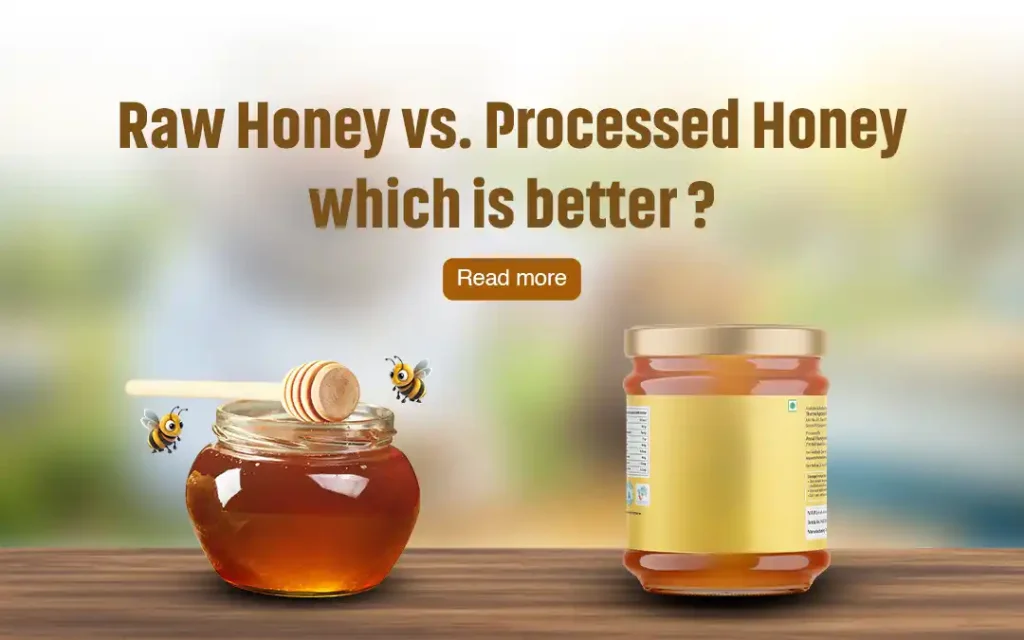
Honey, the golden nectar produced by bees, has been cherished for centuries for its sweetness and potential health benefits. But when it comes to choosing honey, you might encounter two main types: raw and processed. So, which one is better? Let’s dive in.
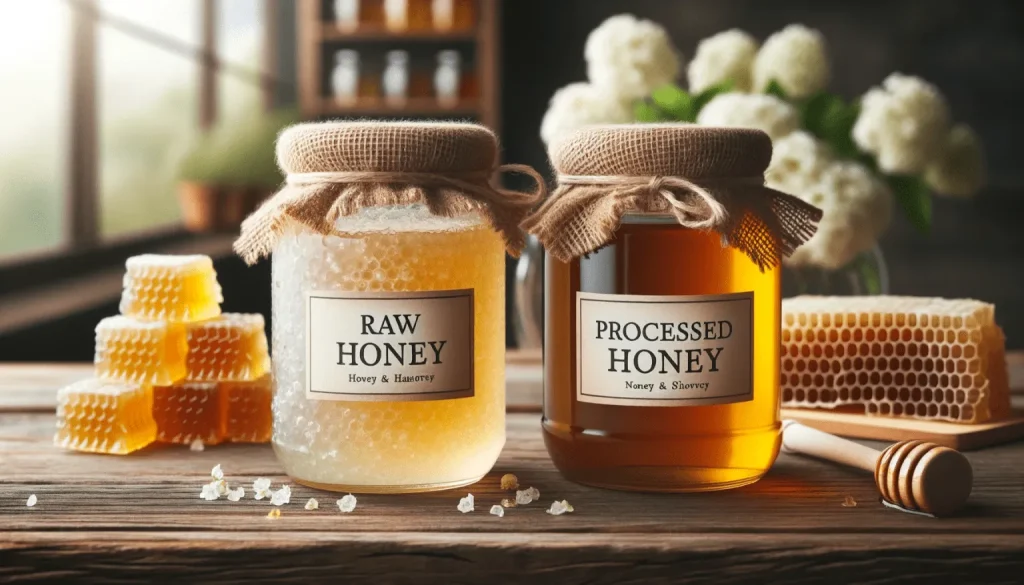
Raw Honey: Nature’s Unfiltered Gift
- What it is?
Raw honey is minimally processed, meaning it undergoes minimal filtration and heating. This preserves many of its natural enzymes, antioxidants, vitamins, minerals, and pollen.
- Benefits
- Rich in Nutrients – Raw honey boasts a higher concentration of antioxidants, enzymes, and vitamins compared to processed honey.
- Antimicrobial Properties – Some studies suggest that raw honey may have antibacterial and antifungal properties due to the presence of hydrogen peroxide.
- Immune Support – The antioxidants and other beneficial compounds in raw honey may help boost the immune system.
- Potential for Allergy Relief – Local raw honey may contain small amounts of pollen from local plants, which could help desensitize some individuals to pollen allergies.
- Side Effects
- Infant Botulism –Raw honey can contain spores of the bacteria Clostridium botulinum, which can be harmful to infants under one year old.
- Identifying Raw Honey –
- Look for labels that clearly state “raw” or “unfiltered” honey.
- Check for information about the source and beekeeping practices.
- Observe the color and texture: Raw honey can vary in color and may have a slightly cloudy appearance due to the presence of pollen and other natural elements.
Processed Honey – Convenience and Consistency
- What it is ?
Processed honey undergoes heat treatment (pasteurization) and filtration to remove impurities, extend shelf life, and improve its appearance and consistency.
- Benefits
- Longer Shelf Life: Pasteurization kills harmful bacteria and prevents fermentation, making the honey last longer.
- Consistent Texture: Processed honey tends to have a smoother and more uniform texture.
- Side Effects
- Reduced Nutritional Value – Heat treatment and extensive filtration can significantly reduce the levels of enzymes, antioxidants, and other beneficial compounds.
- Potential for Added Sugars: – Some processed honeys may contain added sugars or sweeteners.
- Identifying Processed Honey:
- Look for labels that do not mention “raw” or “unfiltered.”
- Check for any added ingredients.
- Observe the color and texture: Processed honey is often clearer and more uniform in color.
Which is Better?
In terms of nutritional value and potential health benefits, raw honey generally comes out on top. However, processed honey can still be a sweetener option, especially if you prioritize convenience and consistency.
Key Considerations:
- Always choose honey from reputable sources.
- If you have any concerns about allergies or health conditions, consult with a healthcare professional or registered dietitian.