

Sigandhini Black Pepper Plants
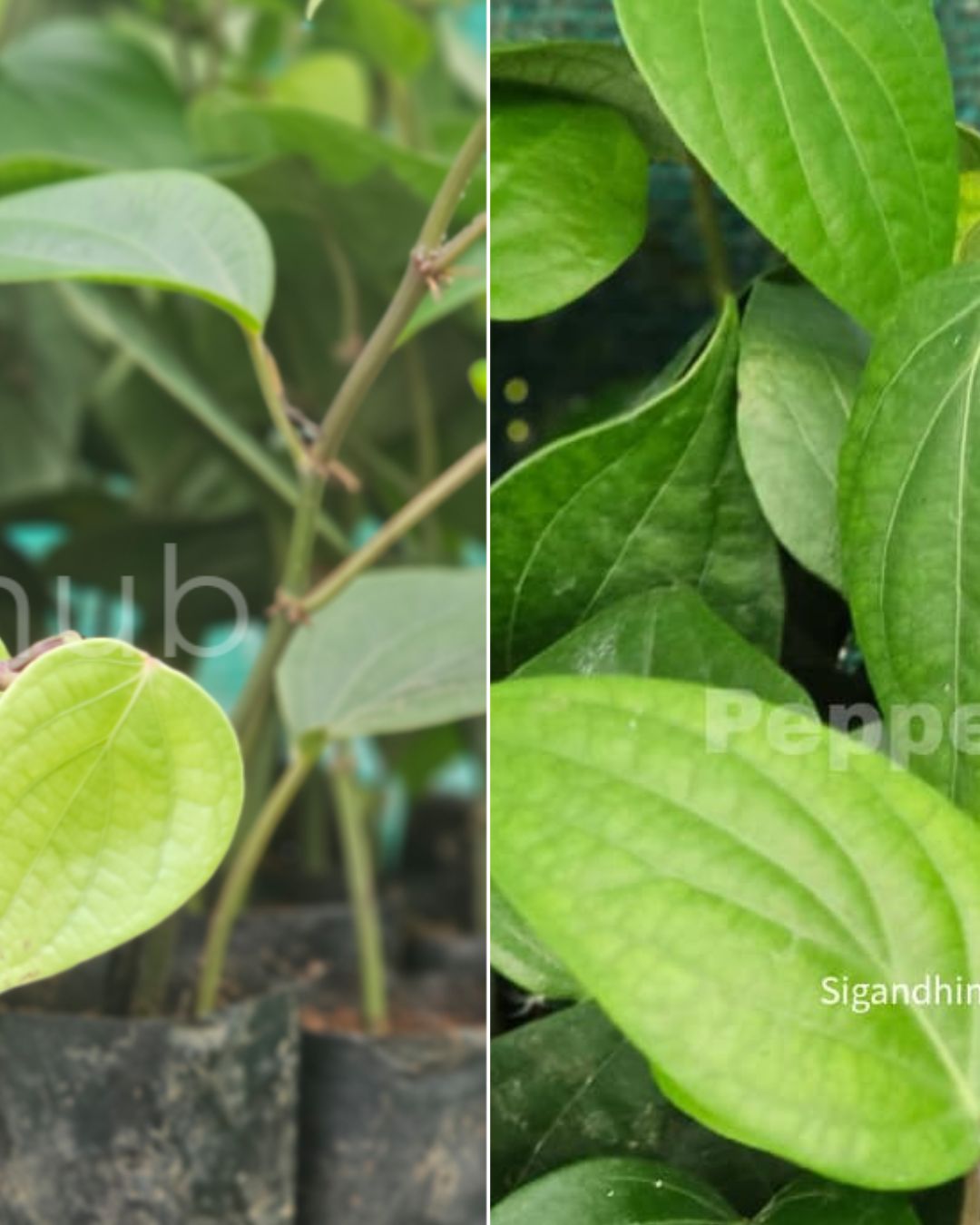
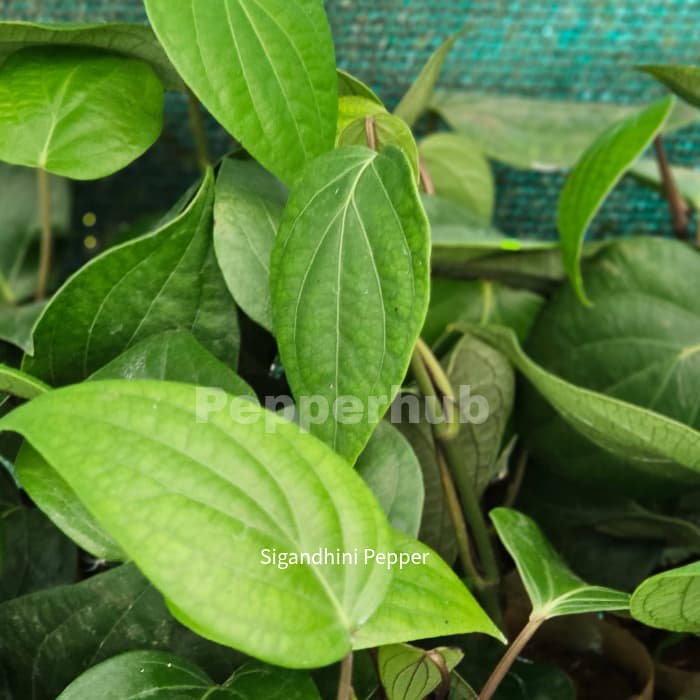
Sigandhini pepper is identified and developed by Sri. Ramakanth Ramachandra Hegde of Hunsekoppa, a small village in Uttar Kannada district of Karnataka. The black pepper variety Sigandini is known for its exceptional agronomic and quality traits, making it a preferred choice among farmers, especially in challenging growing conditions. Each spike typically bears around 80 berries with a compact setting and minimal pinhead formation, contributing to its high yield potential. Sigandini also demonstrates broad leaves of medium length that optimize canopy space usage, and its vines are vigorous with dense branching. The variety shows excellent tolerance to foot rot, slow wilt, and quick wilt, along with reported resistance to viral infections, making it ideal for virus-affected plots. Its early maturity (by December–January) offers a longer rest period post-harvest, supporting consistent annual bearing. Furthermore, it shows strong drought tolerance, with nursery plants from single-node cuttings exhibiting excellent field establishment. These characteristics collectively position Sigandini as a robust, high-performing, and farmer-friendly variety for sustainable black pepper cultivation.
Key Features of Sigandhini Black Pepper
-
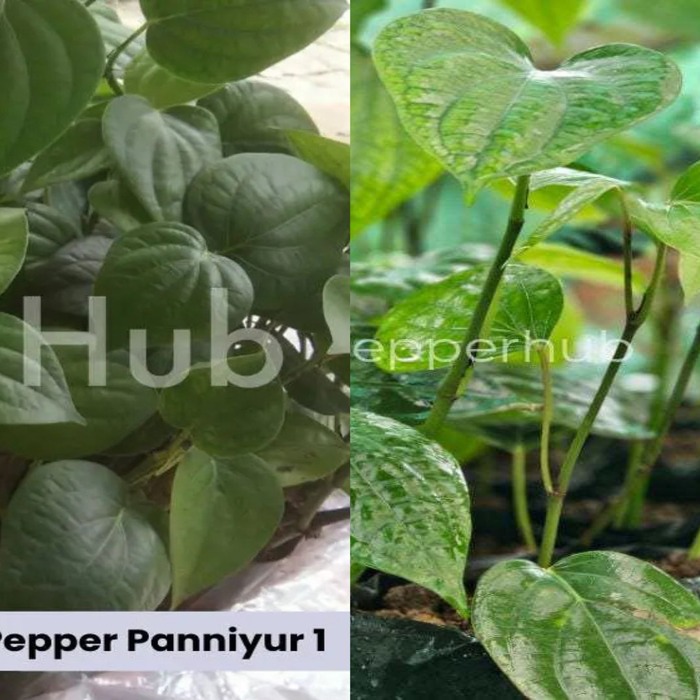
High Yield: Sigandhini produces approximately 86 spikes per square meter, surpassing the yield of varieties like Panniyur-1.
-
Disease Resistance: It exhibits significantly lower susceptibility to foot rot (8.34%) and slow wilt (8.75%) compared to Panniyur-1, which records 24.16% and 26.25% respectively.
-
Quality Attributes:
-
Piperine Content: Higher at 5.04%, enhancing its pungency and medicinal value.
-
Oleoresin Content: Elevated at 7.24%, contributing to its rich aroma and flavor.
-
Bulk Density: Denser at 578.36 g/L, indicating superior quality.
-
-
Growth Characteristics: The plants are vigorous, reaching heights of 6.86 meters, with longer leaves and more runners per vine, indicating robust growth.
-
Early Maturity: Harvesting can commence nearly a month earlier, around December-January, providing an advantage in crop planning.
This black pepper variety exhibits strong resistance to slow wilt and quick wilt diseases, along with a higher overall tolerance to pests and infections, making it ideal for cultivation in virus-affected plots—an observation supported by farmers. It matures early, with harvesting possible by December–January, nearly a month ahead of the popular hybrid Panniyur-1. This early maturity offers a longer rest period for the plant, promoting regular and consistent yields. The vine features a well-spread canopy with numerous branches and is noted for its drought tolerance. Nursery plants raised from single-node cuttings show vigorous growth and excellent field establishment. Additionally, this variety is highly suitable for multi-storeyed cropping systems, especially when grown alongside arecanut.
IISR Thevam: A High-Yielding Pepper Variety
IISR Thevam is a remarkable black pepper variety developed by the Indian Council of Agricultural Research (ICAR) through its Indian Institute of Spice Research. Released in 2004, Thevam has garnered significant attention for its exceptional performance and adaptability.
Key Features of IISR Thevam:
- High Yielding: Known for its impressive yield potential, Thevam typically produces around 5.17 kg of fresh pepper per vine. With a dry recovery rate of 35%, this translates to a substantial harvest of dried pepper.
- Adaptability: Thevam thrives in both high-altitude regions and plains, making it suitable for a wide range of cultivation environments.
- Disease Resistance: It exhibits tolerance to foot rot diseases, a common challenge in pepper cultivation.
- Medium Maturity: Thevam matures in a reasonable timeframe, typically reaching maturity within 3-4 years of planting.
Morphological Characteristics:
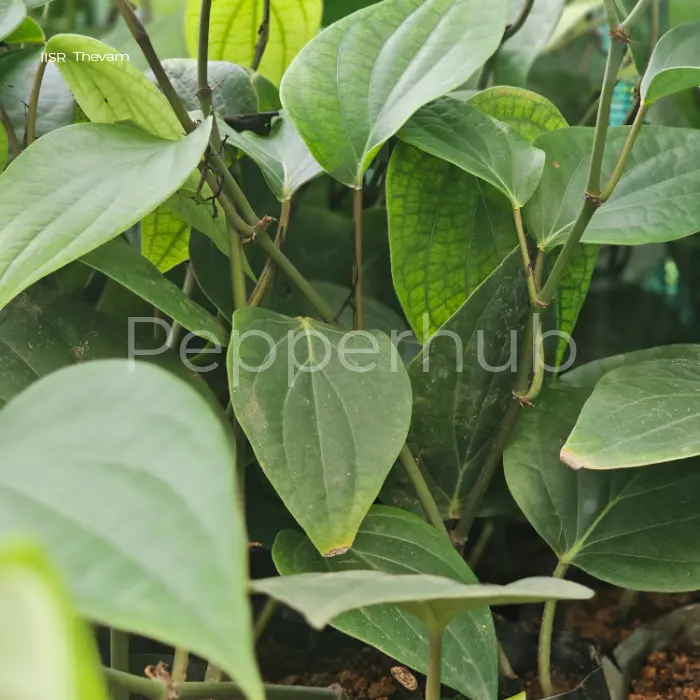
- Leaf: Thevam has ovate-elliptic leaves with a length of 14.2 cm and a breadth of 7.0 cm.
- Spike: The pepper spikes are relatively short, measuring 8.2 cm in length.
- Fruit: Each spike typically bears 392 fruits, with a 1000-fruit weight of 155 grams.
Quality Attributes:
- Piperine Content: Thevam contains a respectable amount of piperine, the compound responsible for black pepper’s characteristic pungency.
- Oleoresin and Essential Oil: It also offers a good balance of oleoresin (8.5%) and essential oil (3.1%).
Areas of Adoption:
- High Altitude Regions: Thevam is particularly well-suited for cultivation in high-altitude areas.
- Plains: It can also be successfully grown in plains regions.
In summary, IISR Thevam is a promising black pepper variety that offers a combination of high yield, adaptability, and disease resistance. Its robust performance and versatility make it an attractive choice for pepper growers seeking a reliable and productive cultivar.

Reviews
There are no reviews yet.