
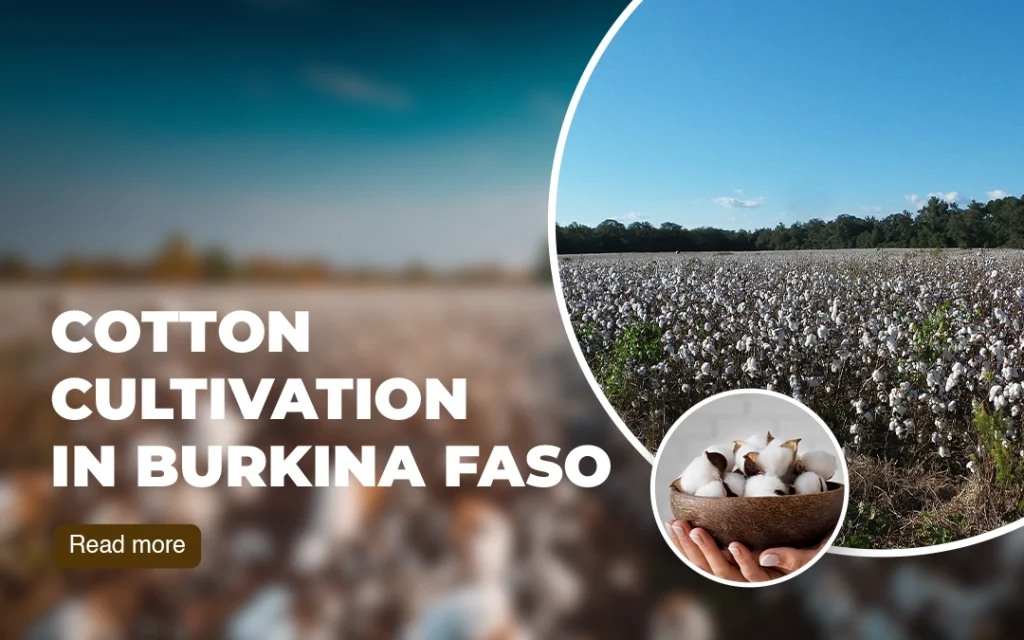
Cotton cultivation in Burkina Faso — a farmer’s guide and a country’s storyBurkina Faso — a landlocked West African country of red soils, Sahelian skies and long traditions of farming — has one crop that’s shaped its economy and landscapes for decades: cotton. Often called “white gold” here, cotton has been central to livelihoods, export earnings and rural development. This blog walks through the why, how and what-next of cotton cultivation in Burkina Faso: a practical guide for farmers and an accessible primer for anyone curious about the crop’s role in the country.
Why cotton matters in Burkina Faso
Cotton is one of Burkina Faso’s main cash crops. It provides cash income for millions of smallholder farmers, supports seeds and ginning industries, and contributes significantly to national export revenues. For many rural households, cotton income finances school fees, health care and input purchases for food crops — so the crop is about survival as much as profit.
Climate, soils and where cotton grows best
Burkina Faso spans climatic zones from Sudanian in the south to Sahelian in the north. Cotton is commonly grown in the Sudanian and southern-Sahelian zones where:
- Rainfall: Moderate, typically 600–1,000 mm per year (seasonal rainy period is the key). Cotton requires a well-timed rainy season for germination and early growth.
- Temperature: Warm to hot; cotton tolerates heat but is sensitive to frost.
- Soils: Deep, well-drained sandy loams to clay loams with fair organic matter content are ideal. Avoid waterlogged areas.
Most commercial cotton cultivation is concentrated in the south and central-south regions where rains and soils are more favourable.
Varieties and seed management
Farmers typically grow improved upland varieties bred for tolerance to drought, pests and short rainy seasons. Certified seeds from accredited suppliers are important — they ensure better germination, uniformity and predictable maturity. Good seed management includes:
- Buying certified seed or using strictly controlled retained seed.
- Storing seed dry and cool.
- Observing seed replacement cycles to avoid degeneration.
Choosing the right variety depends on local rainfall pattern, disease pressure and maturity window.
Land preparation and planting
- Land preparation: Plough once or twice to produce a fine seedbed. Remove weeds and crop residues that can harbour pests.
- Planting time: Plant at the start of the rainy season when the first reliable rains arrive. Timely planting is critical — late planting shortens the growing window and increases risk.
- Planting density: Row spacing and plant population are adjusted for variety and soil fertility. Typical smallholder patterns use rows with 60–90 cm spacing and intra-row spacing to match seed rate recommendations.
- Seed treatment: Treating seed can reduce early damping-off and insect damage.
Crop management: fertilizer, weeding and water
- Fertilizer: Cotton is a nutrient-demanding crop. Balanced fertilization (N-P-K with micronutrients as needed) improves yields. Soil testing is ideal but where unavailable, follow extension service recommendations.
- Weeding: Early-season hoeing or manual weeding reduces competition and boosts yields. Mulching and cover crops can also help.
- Water: Cotton is relatively drought-tolerant but benefits from steady soil moisture in bud formation and boll development. In regions where supplementary irrigation is possible, yields improve substantially.
Pest and disease management
Cotton in Burkina Faso faces pests such as bollworms, aphids, jassids and diseases like bacterial blight or fungal issues. Integrated Pest Management (IPM) is the best approach:
- Monitoring: Regular field scouting to detect pests early.
- Biological control: Encourage natural enemies (parasitic wasps, predators).
- Threshold-based spraying: Spray only when pest populations exceed economic thresholds to reduce costs and resistance.
- Resistant varieties: Use varieties with known tolerance to key pests and diseases.
- Safe pesticide use: If chemical controls are needed, follow label instructions, protective measures and withdrawal periods.
Adoption of IPM lowers costs and environmental harm while protecting beneficial insects.
Harvesting and post-harvest handling
- Harvest timing: Harvest mature bolls as they open. Delays increase lint contamination and losses.
- Picking: Manual picking is common. Careful picking reduces trash content. Multiple pickings over several weeks are often required.
- Ginning and storage: Deliver cotton to licensed ginneries where lint is separated from seed. Proper temporary storage before ginning (dry, ventilated) prevents moulding and quality loss.
- Seed: Cottonseed is valuable for oil, animal feed and planting. Proper processing increases its market value.
Economics: margins, markets and cooperatives
Cotton production economics vary by yield, input cost and market price. Smallholders often sell to parastatal or private cotton companies through structured buying systems. Key economic enablers:
- Cooperatives and unions: Help aggregate produce, access credit, negotiate prices and access inputs.
- Fair contracts: Transparent pricing and prompt payments encourage production.
- Value addition: Developing local ginning, oil extraction and seed processing retains more value domestically.
Environmental and social challenges
- Soil fertility decline from continuous cultivation without replenishment is a concern.
- Pesticide misuse can harm health and biodiversity.
- Climate variability threatens rain-fed yields with unpredictable rains and heat stress.
- Market volatility and dependence on a single cash crop can increase vulnerability.
Sustainable practices — crop rotation, integrated soil fertility management, conservation agriculture, and IPM — can mitigate many risks.
Sustainability and innovation
Positive pathways for sustainable cotton in Burkina Faso include:
- Organic and fair-trade certification for premium markets.
- Agroforestry and intercropping to diversify incomes and improve soil health.
- Improved credit and insurance schemes to buffer price and weather shocks.
- Extension and farmer training on best practices, post-harvest handling and market literacy.
- Breeding for drought- and pest-tolerant varieties and for early maturity.
Innovations that lower input costs and improve resilience will directly boost smallholder livelihoods.
Practical tips for farmers (quick checklist)
- Plant at the start of reliable rains.
- Use certified seed and follow recommended seed rates.
- Conduct at least one soil test or follow local fertilizer recommendations.
- Scout fields weekly during growth and adopt IPM.
- Keep picking timely and deliver cotton to licensed gins.
- Join a cooperative or farmer group for better bargaining power and access to inputs.
Cotton remains a cornerstone crop of Burkina Faso — a source of cash, a livelihood lifeline for rural families, and an economic export earner. Yet for cotton to continue supporting communities, focus must shift to sustainable intensification: better seeds, smarter pest control, soil upkeep, and stronger market institutions. For farmers, buyers and policymakers who embrace those changes, cotton can remain “white gold” — productive, profitable and sustainable — for generations to come.