
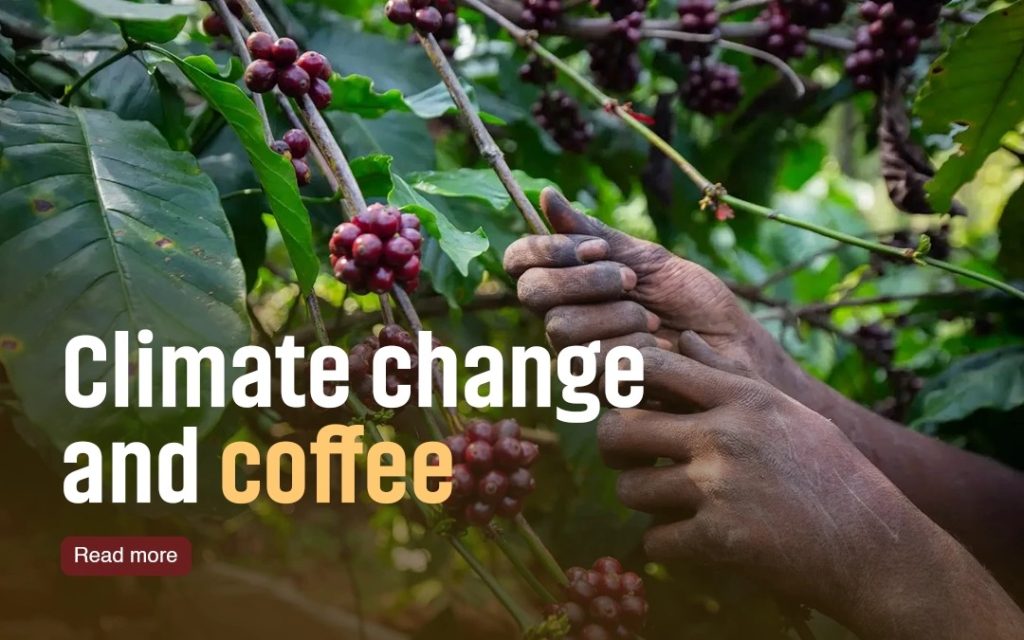
That first sip of coffee in the morning – it’s a ritual, a necessity, a moment of pure bliss for millions. But what if that simple pleasure was under threat? Climate change isn’t just about melting ice caps and rising sea levels; it’s coming for your coffee.
Yes, you read that right. The very beans that fuel our days are facing an existential crisis. Here’s the bitter truth. Moreover, the vulnerability of coffee growing areas is influenced by several factors such as, land size and income level, labour availability, postharvest infrastructure, access to market, negotiation capacity, technical and financial assistance, etc.
Climate change causes leaf shedding, reduced coffee plant productivity, and increased vulnerability to pests. Extreme cold delays plant flowering and lowers berry quality. Heavy rains at irregular times cause cherries to burst and drop prematurely. Continuous heavy rains before harvest prevent drying, leading to crop spoilage. Climate change is certain to impact coffee yields due to temperature changes. Coorg is experiencing water scarcity, affecting coffee production. Coffee plants require water, nutrients, rainfall, and sunshine for healthy growth and harvest. Fluctuations in yield have increased, with lower yields in recent years.
Climate change and coffee production
Coffee plants are notoriously picky. They thrive in specific temperature ranges, rainfall patterns, and altitudes. As global temperatures rise and weather patterns become increasingly erratic, these delicate conditions are being disrupted.
- Increased Temperatures: .Higher temperatures stress coffee plants, making them more susceptible to pests and diseases. This weakens the plants, leading to lower yields and poorer quality beans.
- Erratic Rainfall: Droughts and floods are becoming more frequent, both of which are devastating for coffee cultivation. Droughts wither the plants, while floods drown them.
- Changing Altitudes: As temperatures rise, coffee farmers are forced to move their crops to higher altitudes, where it’s cooler. However, this encroaches on natural ecosystems and reduces the available land for cultivation.
- Pest and Disease Proliferation: Warmer temperatures create ideal breeding grounds for pests like the coffee berry borer and diseases like coffee leaf rust. These infestations can decimate entire crops.
How it affects?
This isn’t just about a potential coffee shortage. Millions of people around the world, particularly in developing countries, depend on coffee farming for their livelihoods. Climate change threatens their economic stability and food security.
Climate change poses a profound threat to coffee, a highly sensitive crop reliant on specific climatic conditions. Rising temperatures and erratic rainfall patterns directly impact coffee plants, often leading to reduced yields and a decline in bean quality, affecting the flavor and aroma of your morning cup. Warmer conditions also foster the spread of pests and diseases, such as coffee leaf rust and the coffee berry borer, which can decimate entire harvests. This necessitates a shift in traditional growing regions, often forcing farmers to higher altitudes where suitable land may be limited, ultimately impacting the livelihoods of millions globally and potentially making coffee a more expensive and less accessible commodity.
What Can We Do?
The good news is, there’s still hope.
- Sustainable Farming Practices: Supporting coffee brands that prioritize sustainable farming practices, such as shade-grown coffee and agroforestry, can help mitigate the impact of climate change. These methods promote biodiversity, conserve water, and reduce carbon emissions.
- Climate-Resilient Varieties: Researchers are developing new coffee varieties that are more resistant to heat, drought, and pests. Supporting research and development in this area is crucial.
- Reducing Our Carbon Footprint: The biggest impact we can make is to reduce our overall carbon footprint. This means making conscious choices in our daily lives, such as reducing energy consumption, using public transportation, and supporting businesses that prioritize sustainability.

The worst scenario is the last 4 to 5 years, where we have been experiencing heavy rains during harvest season, i.e., November to February, which normally is a complete dry spell. India is unique to the sun drying of coffee. However, due to unseasonal rains during harvest, plantations are now installing mechanical dryers to avoid quality deterioration. Coffee production is typically a labour-intensive process that relies heavily on seasonal migrant workers. Extreme weather and natural disasters brought about by climate change may further limit the available workforce required for things like hand-picking cherries and quality control—making the already delicate procedure of producing high quality specialty coffee even harder.
Climate change poses an escalating threat to global coffee production, with India, a key producer of both Arabica and Robusta varieties, experiencing significant impacts from unpredictable weather patterns. Rising temperatures, prolonged droughts, erratic rainfall disrupting blossom and backing showers, and increased pest and disease outbreaks are severely affecting coffee yields, quality, and the very suitability of traditional growing regions like Karnataka, Kerala, and Tamil Nadu. This growing instability directly jeopardizes the livelihoods of millions of smallholder coffee farmers, driving up production costs and necessitating urgent adaptation strategies such as investing in climate-resilient varieties, sustainable water management, and enhanced agroforestry practices to ensure the future of this vital global commodity.