
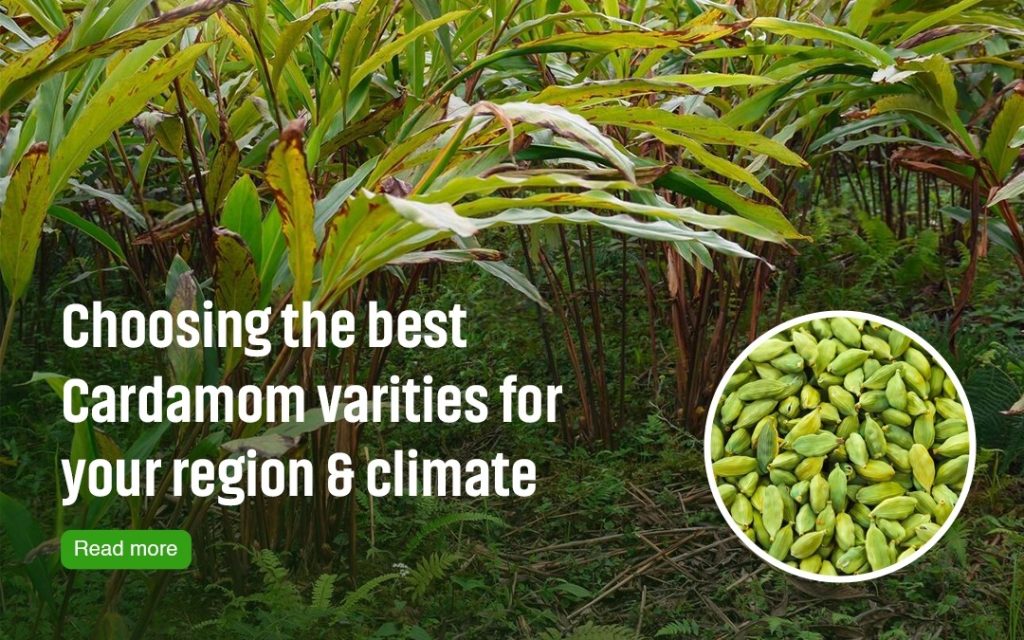
When selecting cardamom for cultivation, it’s crucial to choose a variety that not only yields well but also suits your climate, soil conditions, and resistance needs. Here’s a guide based on the best fit for your region and environmental conditions.
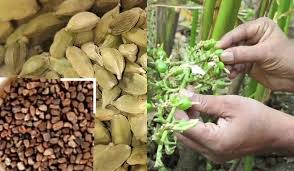
Malabar Cardamom (Elettaria cardamomum)
Malabar cardamom is ideally suited for warm tropical climates with moderate elevation. Known for its slender plant structure and rich aromatic profile, this variety is favored for general cultivation purposes. Beyond its culinary appeal, Malabar cardamom offers several health benefits—it aids digestion, reduces inflammation, and helps in lowering blood sugar levels, making it a holistic addition to both kitchens and herbal remedies.
Mysore Cardamom
Mysore cardamom thrives best in higher altitudes with cool, moist conditions, particularly in regions like Karnataka’s Western Ghats. This variety stands out for its larger capsules and bold, robust flavor, making it highly prized in culinary applications. While the yield is typically lower than that of hybrid varieties, the superior quality and strong market demand allow it to command a premium price, making it an excellent choice for niche or quality-focused growers.
Vazhukka Cardamom (Hybrid of Malabar & Mysore)
The Vazhukka variety is a hybrid blend of Malabar and Mysore cardamom, designed to meet the needs of farmers seeking higher yield and improved pest resistance. It is characterized by its bright green capsules, shorter plant height, and a robust overall appearance. With moderate resistance to pests and diseases, this variety offers superior yield efficiency, making it a popular and profitable choice for commercial cardamom cultivation.
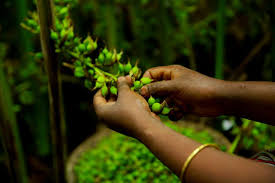
Improved & Region-Specific Varieties
| Variety | Climate Suitability | Resistance/Tolerance | Best For | Yield Potential (kg/ha) |
| ICRI-1 (Malabar) | General tropical | – | Early maturing needs | 656 |
| ICRI-2 (Mysore) | Higher altitudes, irrigated | Tolerant to azhukal (capsule rot) | Irrigated hill plantations | 766 |
| IISR Avinash | Valleys, humid areas | Resistant to rhizome rot | Rhizome-prone zones | 847 |
| IISR Vijetha | Moderate rainfall & mosaic-affected areas | Katte & mosaic virus resistance | Disease-prone regions | 643 |
| PV-1 (Malabar) | Warm lowland regions | – | Early maturing, smaller capsules | 380 |
| PV-2 | Idukki hills, Cardamom Hill Reserves | Resistant to multiple pests and diseases | Disease hotspots, high-yield needs | 982 |
💡 Did You Know?
Did you know ?
PV-2 cardamom can yield nearly 1,000 kg/ha while resisting multiple diseases like rhizome rot, azhukal, and capsule borers?
Perfect for high-yield farming in Idukki’s Cardamom Hill Reserves! PV-2: It is a variety released from CRS, Pampadumpara of KAU. A variety of small cardamom suitable for cardamom hill reserves of the Idukki district. Tolerant to thrips, azhukal/capsule rot and rhizome rot and tolerant to pseudo-stem/panicle/capsule borer.