
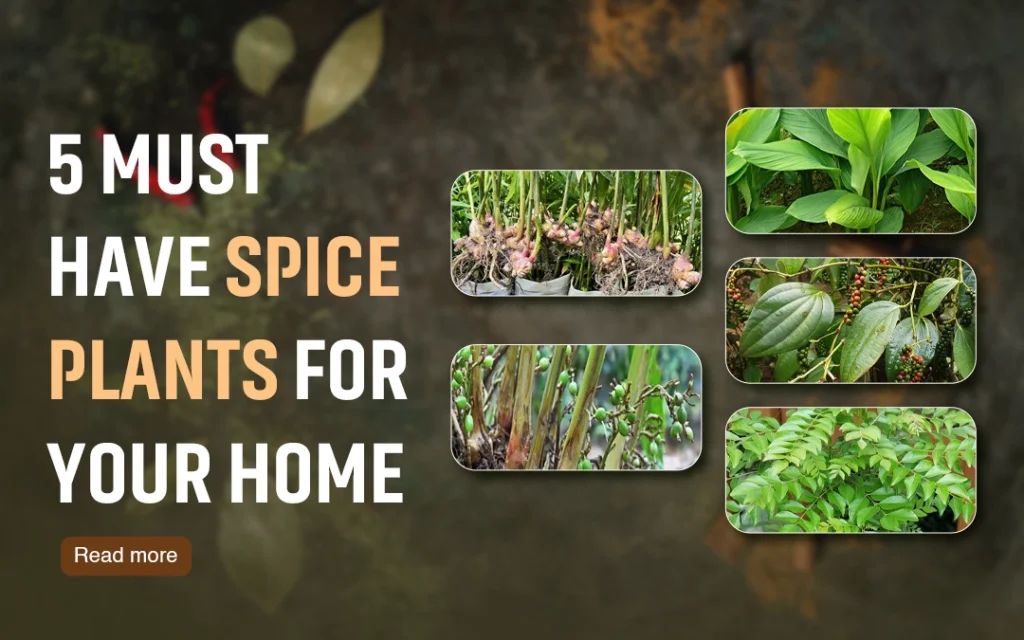
Imagine stepping into your kitchen and reaching for fresh, fragrant spices grown right at your fingertips. No more stale powders or expensive supermarket herbs! Cultivating your own spice plants is not only rewarding but also adds a burst of flavor and aroma to your culinary adventures. Whether you have a sprawling garden or a sunny windowsill, these five must-have spice plants are easy to grow and will elevate your cooking to new heights.
Most kitchen spices are super simple to grow, whether indoors or on your balcony.
The best part? These little green wonders thrive on ignorance. So, just provide a little care, and you’re good to go.
Lets see which all are the 5 must have spice plants
- Turmeric
- Black Pepper
- Curry leaves
- Ginger
- Cardamom
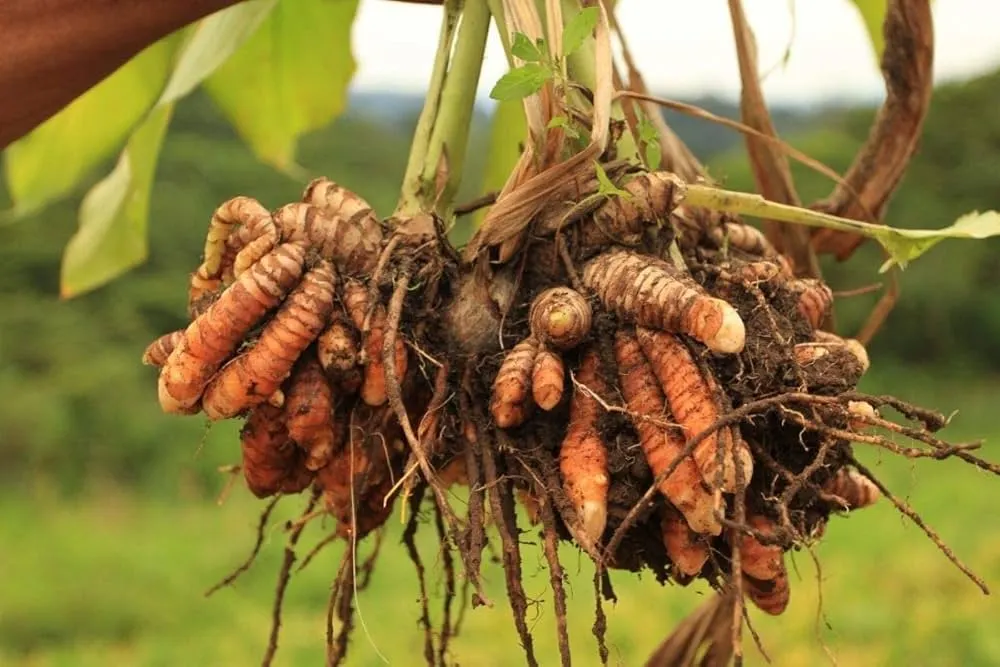
Turmeric (Curcuma longa): The Golden Healer
Turmeric is a powerful spice that adds a rich, golden yellow hue and warm, spicy flavor to meals, thriving in sunny locations and continuing to grow year after year. This powerful spice comes from large, green-leafed plants that thrive in sunny locations. It’s a staple in Indian and Southeast Asian cuisine, adding color and depth to curries, stews, and rice dishes. To grow turmeric at home, plant rhizomes (the underground stems) in well-draining, rich soil, ideally in a pot if you’re in a cooler climate, as it prefers warm, humid conditions. Keep the soil consistently moist but not waterlogged, and provide partial shade. You can harvest the rhizomes after about 8-10 months, when the leaves start to yellow and die back.
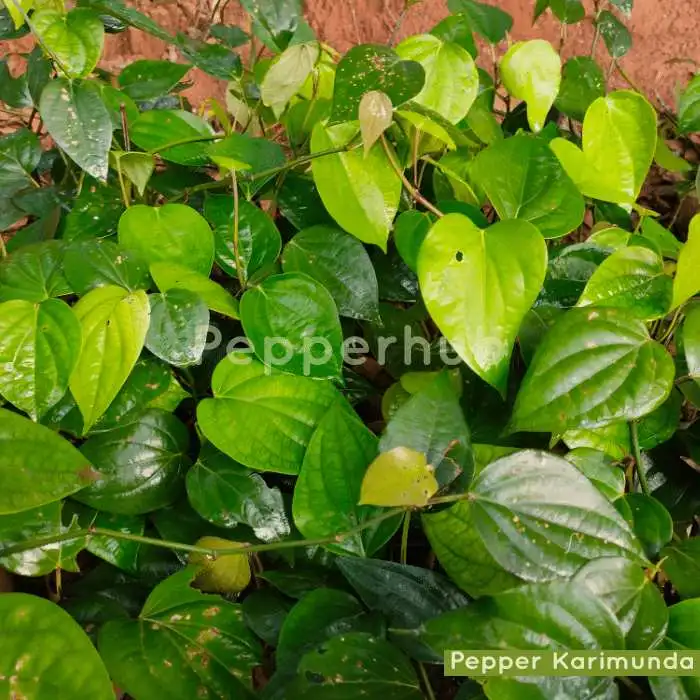
Black Pepper (Piper nigrum): The King of Spices
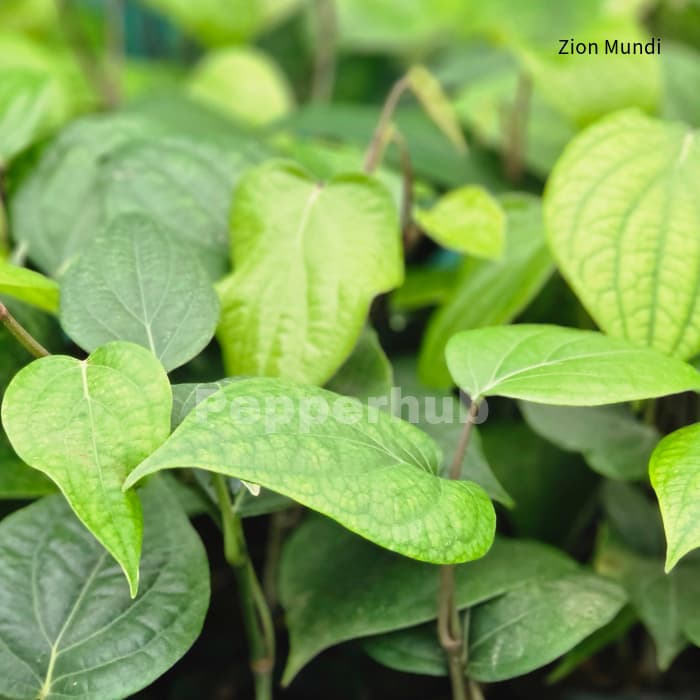
Black pepper, known as the “king of spices,” offers a pungent, sharp, and slightly fruity flavor that enhances almost any savory dish. It’s a versatile spice used worldwide, from seasoning steaks to adding a kick to soups and sauces. Growing black pepper at home can be challenging outside tropical regions. If you are in a tropical area, it requires a support structure like a trellis or tree, as it’s a climbing vine. Plant cuttings or seedlings in rich, well-draining soil and provide partial shade. Keep the soil consistently moist and ensure good air circulation. In non tropical regions, it must be kept in a green house.
Ginger (Zingiber officinale)
Ginger, with its pungent, spicy, and slightly sweet flavor, is a versatile spice used in savory and sweet dishes, as well as beverages. It’s also known for its medicinal properties, aiding digestion and relieving nausea. To grow ginger at home, plant rhizomes in well-draining, rich soil, ideally in a pot if you’re in a cooler climate. Keep the soil consistently moist and provide partial shade. Ginger prefers warm, humid conditions and can be harvested after about 8-10 months, when the leaves start to yellow.

Curry leaves
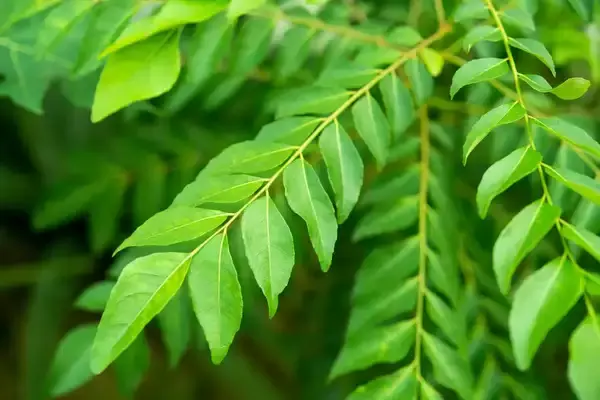
Curry leaves are an absolute must-have spice plant for every home garden. Known for their aromatic flavor and countless health benefits, curry leaf plants are easy to grow and require minimal maintenance. Whether added fresh to curries, chutneys, or tempering, their distinct aroma elevates any dish instantly. They thrive well in pots or garden beds, making them perfect for both indoor balconies and outdoor spaces. With regular pruning and a sunny spot, you’ll have a steady, fresh supply of curry leaves right at your doorstep—organic, flavorful, and always within reach.
Cardamom (Elettaria cardamomum)
Cardamom, often called the “queen of spices,” boasts a complex, warm, and aromatic flavor with hints of citrus and mint. It’s a staple in Indian and Middle Eastern cuisine, used in desserts, beverages, and savory dishes. Growing cardamom at home is challenging, as it requires warm, humid conditions and partial shade. It’s a slow-growing plant and may take several years to produce pods. A green house is advised for non tropical regions.
