
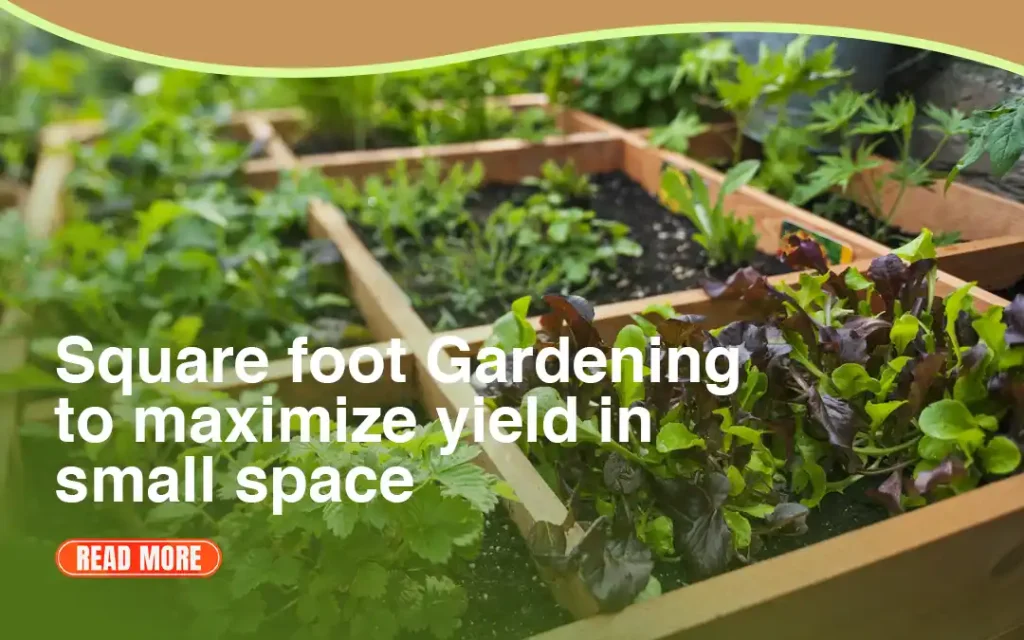
Have you ever envisioned a thriving vegetable garden but felt constrained by your available space? Square foot gardening is the ideal option whether you have a small yard or a tiny balcony! You can cultivate a lot of fresh sabzi in even the smallest areas using this ingenious technique.
Don’t worry about long, wide rows! Dividing your growing space into small 1-foot by 1-foot squares is known as “square foot gardening.” Every square turns into a miniature garden plot, enabling you to efficiently grow a wide range of fruits, vegetables, herbs, and even flowers.
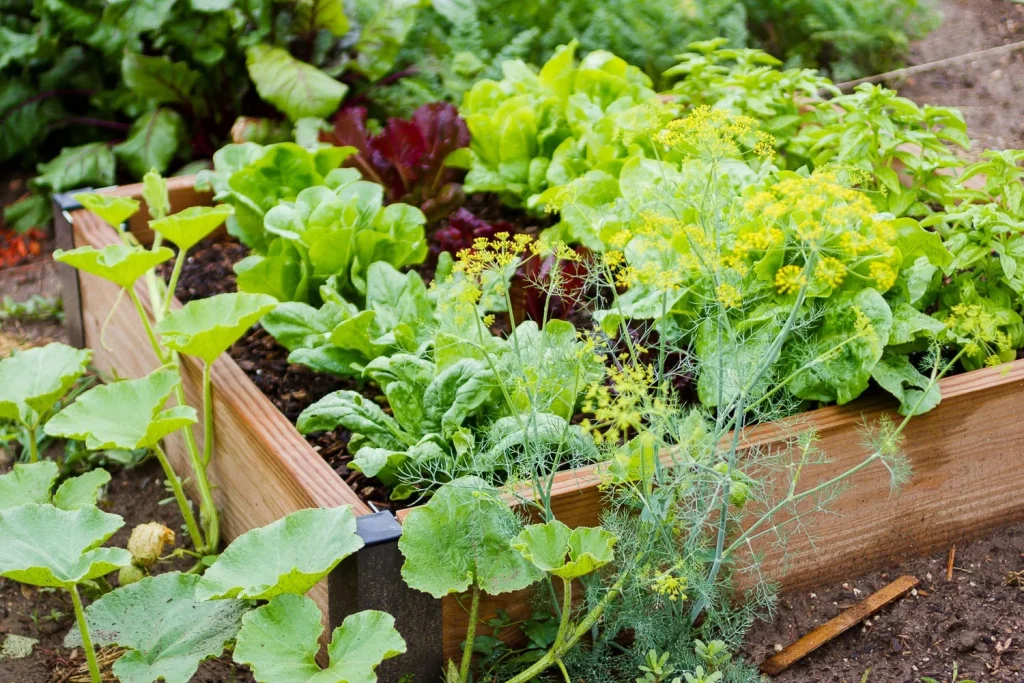
The Benefits of Square Foot Gardening
Maximum Yield, Minimal Space: By concentrating on plants that do well in compact spaces, you may grow more in less space.
Less Watering and Weeding: Dense planting naturally uses less water and less weeds.
Simple to Handle: No more stooping and straining to get to the center of expansive rows!
Easy for beginners: For novice gardeners, a straightforward, well-organized method is ideal.
Starting Out: Setting Up Your Square Foot Garden

Build Your Bed: Use bricks, wood, or any other sturdy material to build an elevated bed. For easy access from all sides, keep it about 4 feet wide, and for most vegetables, keep it 6 to 12 inches deep.
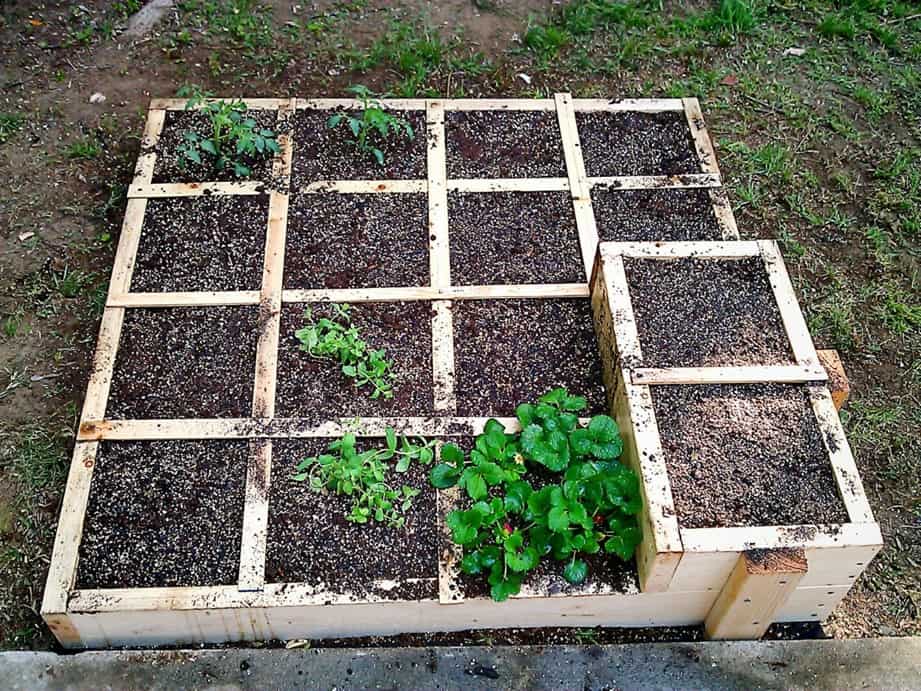
Put Your Squares in Marks: Make a 1-foot-square grid inside your bed using string or thin wood.
The Ideal Blend: Don’t use ordinary soil! A unique blend of 1/3 compost, 1/3 peat moss (or cocopeat), and 1/3 coarse vermiculite should be used to fill your bed. This mixture is frothy, light, and nutrient-rich for the best possible growth.
The fun part is choosing your crops! Choose vegetables that are appropriate for your climate zone.
Square Foot Planting Guide
There is a distinct planting capacity for each square:
Each square has one plant: Peppers, eggplant, squash, and tomatoes
Each square has four plants: Medium-sized herbs, onions, and bush beans
Each square has nine plants: Carrots, spinach, beets, and other leafy greens
Each square has 16 plants: Small herbs and radishes
Choosing the Right Location
Choose a level spot that gets six to eight hours of direct sunlight each day. In order to avoid waterlogging, proper drainage is essential. For simple irrigation, take into account being close to a water source. Steer clear of places with a lot of foot activity or high winds.
For convenience, locate the garden close to your house. This facilitates regular produce harvesting and plant care. To get the most sunshine possible during the growth season, use a location that faces south.
Designing Your Garden Layout

Divide your landscape into 1-foot squares using a grid method. Mark the grid with string or thin strips of wood. Depending on the size and spacing needs of the plants, varying numbers of plants can be accommodated in each square.
To make the most of available space and keep pests away, arrange companion plants. Plants with comparable requirements for sunlight and water should be grouped together. Rotate your crops every year to lower the risk of illness and stop soil erosion.
Think of growing plants like cucumbers and peas in a vertical garden. This boosts yield and conserves space. For convenient access to every area of the garden, include paths.
Building Your Raised Bed
The key to successful square foot gardening is building a strong foundation. The perfect growing habitat for plants is a well-built raised bed with nutrient-rich soil.
Making raised beds, usually 4 feet by 4 feet, and dividing them into 16 one-foot squares is the fundamental idea. After that, a different crop is planted in each square, taking into consideration the particular spacing requirements of each plant. By doing away with the necessity for conventional row planting, this method saves space and facilitates upkeep.

For both inexperienced and seasoned gardeners, square foot gardening is perfect. It decreases weeding, cuts down on water use, and streamlines the growing process. A tiny square foot garden can yield a surprisingly large amount of fresh produce throughout the growing season with careful planning.