
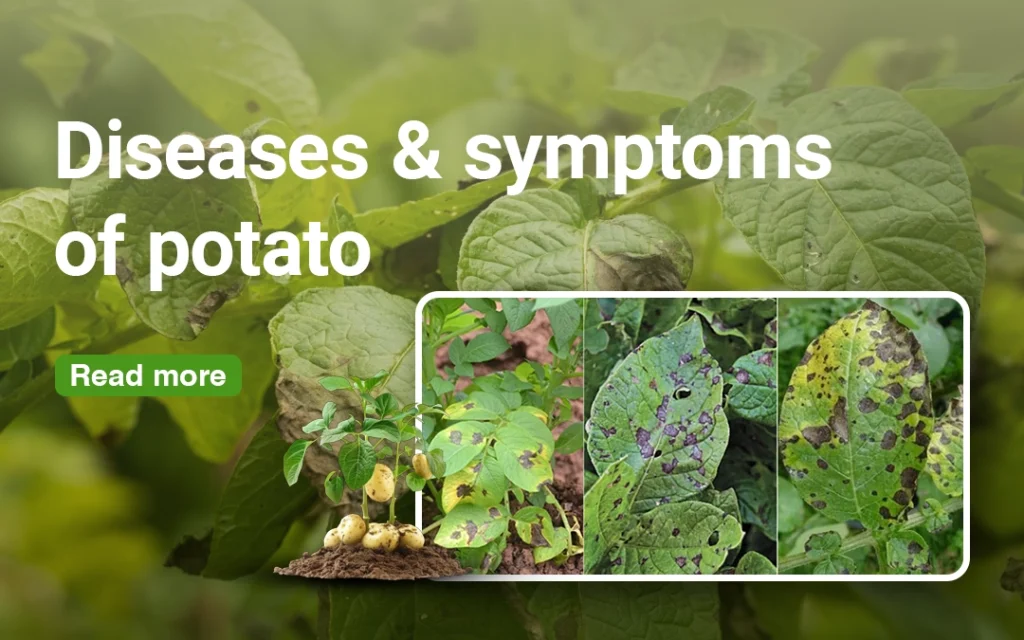
Do you know what the common diseases of potatoes are? Brown rot or bacterial wilt is a destructive disease of the potato. It causes losses in two ways: one is premature wilting and death of the plants, leading to total loss of yield, and another is rotting of the tubers in transit or storage. The main symptoms of potato virus are Symptoms include chlorotic mosaics in the haulm with possible pallor, leaf deformation, reduced leaflet size, and overall reduction in vigor. Susceptible varieties could also produce smaller tubers. Here are some common potato illnesses and symptoms.
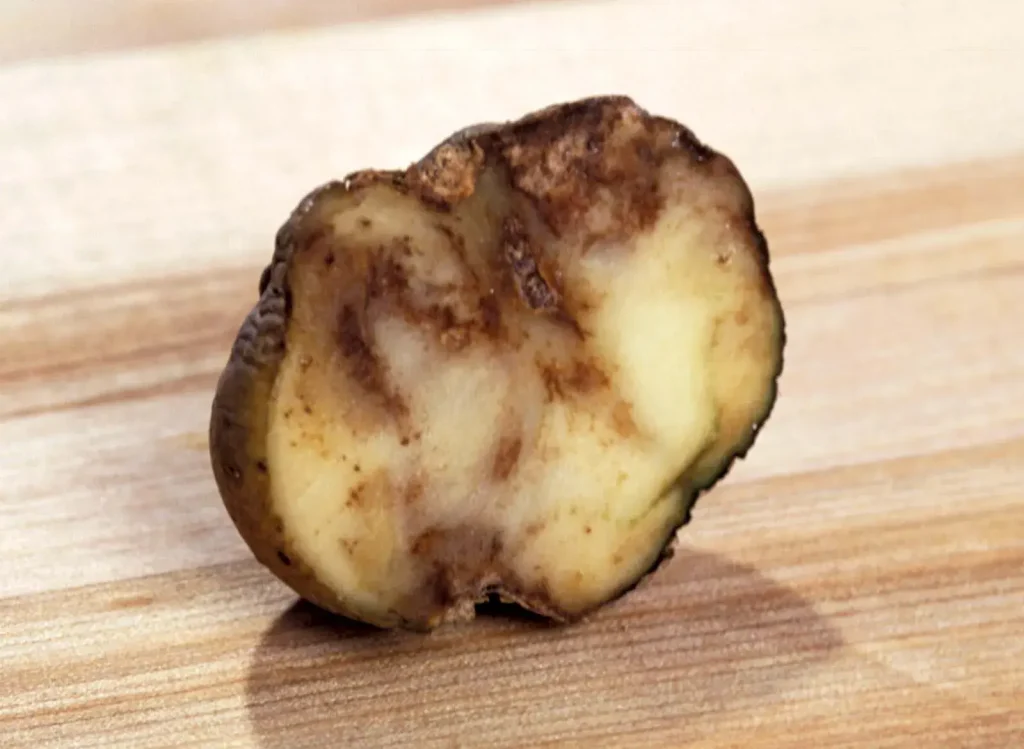
- Late Blight (phytophthora infestans)
- Symptoms – Watery rot of leaves that spreads quickly, followed by collapse, shriveling, and browning.
- Brown lesions may also develop on the stems, and tubers may have a reddish-brown decay below the skin.
- Impact: If not addressed, late blight can kill whole crops.
- Early Blight (Alternaria solani)
- Symptoms
- Small, dark stains with concentric rings appear on elder leaves.
- Leaf falling before its time.
- Tubers have black sunken patches.
- Impact: Reduced yield and low-quality tubers.
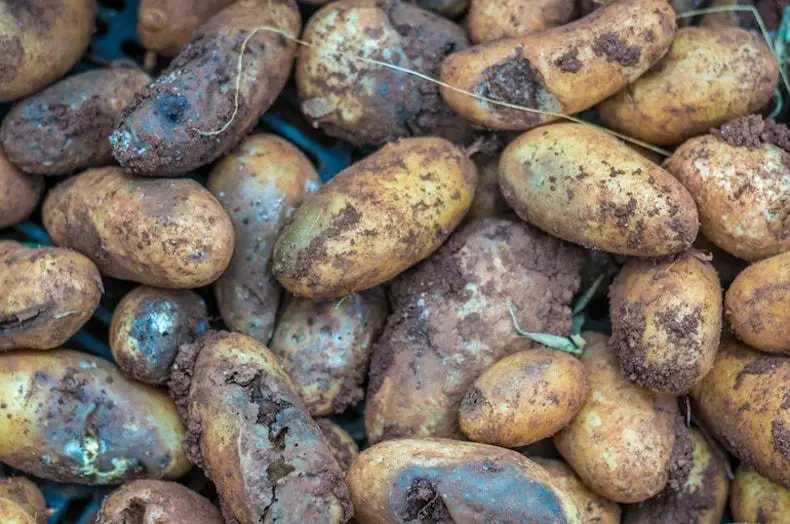
3.Potato scab (Streptomyces spp.)
- Symptoms:
- Corky, elevated, or pitted sores appear on tuber surfaces.
- There is no substantial impact on foliage.
- Impact: Changes the appearance of tubers, making them less marketable.
4.Blackleg (Pectobacterium spp.)
- Symptoms: Black, soft rot occurs at the base of stems. The yellowing and wilting of leaves. Infected tubers give off a foul odor.
- Impact: Causes plant collapse and tuber rot.
5. Potato Virus Y (PVY)
- Symptoms:
- Mosaic pattern on leaves.
- The leaves are curling and yellowing.
- Stunted growth and inadequate tuber development.
- Impact: Significant reduction in yield and quality.
6.Fusarium Wilt (Fusarium species)
- Symptoms
- Lower leaves yellow and wilt.
- Vascular tissues in stems and tubers turn brown.
- Dry rot develops in stored tubers.
- impact: Plant death and storage losses are the result of the impact.
7. Common Potato Wart (Synchytrium Endobioticum)
- Symptoms
- Tubers and stolons exhibit cauliflower-like growths.
- There was no obvious influence on the foliage.
- Impact: Makes tubers unsafe for consumption and trade.
8. Brown Rot (Ralstonia solanacearum)
- Symptoms
- Wilting and yellowing of the leaves.
- Vascular tissues in tubers turn brown.
- Milky oozing from sliced tubers in water.
- Impact: A serious threat, particularly in warm climates.
Prevention and management
1. Crop Rotation: Avoid planting potatoes in the same field repeatedly.
2. Use Resistant Varieties: opt for disease-resistant potato varieties.
3. Good Hygiene: Avoid infected plants and sanitize tools.
4. Proper Storage: Make sure tubers are stored in cool, dry conditions.
5. Chemical Control: Use bactericides as per guidelines.
By recognizing and addressing diseases early, farmers can ensure a healthy potato yield and reduce losses.
Read more about agriculture-related blogs