
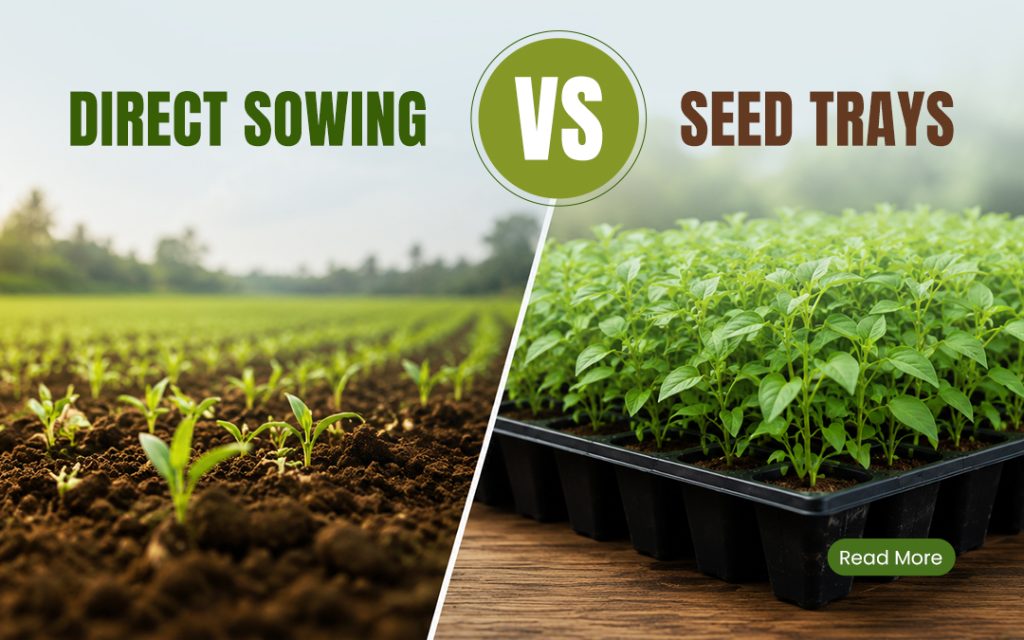
Starting plants from seeds is one of the most rewarding aspects of gardening and farming. However, before planting, one important question arises: Should you sow seeds directly into the soil or start them in seed trays? Both methods have their advantages and are suitable for different crops and growing conditions.
Choosing the right method can improve germination rates, reduce transplant shock, save time, and ultimately increase your harvest. In this guide, we’ll compare direct sowing vs seed trays, helping you decide which approach works best for your garden or farm.
What is Direct Sowing?
Direct sowing is the process of planting seeds directly into the garden bed, raised bed, or field where the plants will grow until harvest.
Once the seeds germinate, they continue growing in the same location without being transplanted.
Advantages of Direct Sowing
1. No Transplant Shock
Since plants remain in the same place throughout their life cycle, they do not experience root disturbance during transplanting.
2. Strong Root Development
Roots grow naturally into the soil from the beginning, producing healthier and deeper root systems.
3. Less Labor
There is no need to prepare trays, transplant seedlings, or maintain a nursery.
4. Cost-Effective
Direct sowing requires fewer materials since seed trays, potting mix, and nursery containers are unnecessary.
Best Crops for Direct Sowing
- Carrot
- Radish
- Beetroot
- Corn
- Beans
- Peas
- Spinach
- Okra
- Pumpkin
- Watermelon
- Cucumber
Disadvantages of Direct Sowing
- Lower germination rates in unfavorable weather.
- Seeds are vulnerable to birds, insects, and rodents.
- Heavy rain may wash away seeds.
- Weed competition is higher.
- Difficult to control soil moisture during early growth.
What are Seed Trays?
Seed trays are containers with multiple small cells designed for starting seeds in a controlled environment before transplanting them into the garden.
Once seedlings develop healthy roots and several true leaves, they are transplanted into the field.
Advantages of Seed Trays
1. Higher Germination Rate
Seed trays provide better control over temperature, moisture, and growing conditions, resulting in more consistent germination.
2. Better Seed Management
Every seed receives equal spacing and care, reducing overcrowding and waste.
3. Protection from Weather
Seedlings are protected from heavy rainfall, strong winds, pests, and extreme temperatures.
4. Longer Growing Season
You can start seeds indoors or in a nursery before outdoor planting conditions become ideal.
5. Stronger Seedlings
Healthy seedlings often establish more quickly after transplanting.
Disadvantages of Seed Trays
- Additional cost for trays and growing media.
- Requires regular watering and monitoring.
- Transplanting takes extra time.
- Poor handling during transplanting can damage roots.
Best Crops for Seed Trays
- Tomato
- Chilli
- Capsicum
- Brinjal (Eggplant)
- Cabbage
- Cauliflower
- Broccoli
- Lettuce
- Celery
- Onion
- Herbs like basil and parsley
Direct Sowing vs Seed Trays: Comparison Table
| Feature | Direct Sowing | Seed Trays |
| Germination Control | Moderate | Excellent |
| Cost | Low | Moderate |
| Labor | Low | Higher |
| Root Disturbance | None | Possible during transplanting |
| Protection from Pests | Low | High |
| Space Management | Less Efficient | Highly Efficient |
| Seed Wastage | Higher | Lower |
| Suitable for Beginners | Yes | Yes (with basic care) |
| Ideal for Large Farms | Yes | Often used for nursery production |
| Weather Protection | Low | Excellent |
Which Method is Better?
The answer depends on the crop and your growing conditions.
Choose Direct Sowing If:
- You are growing root vegetables.
- You have enough garden space.
- Weather conditions are favorable.
- You want a low-cost planting method.
- The crop dislikes root disturbance.
Choose Seed Trays If:
- You want higher germination success.
- You are growing delicate vegetable seedlings.
- You have limited growing space.
- Weather is unpredictable.
- You want an early harvest.