
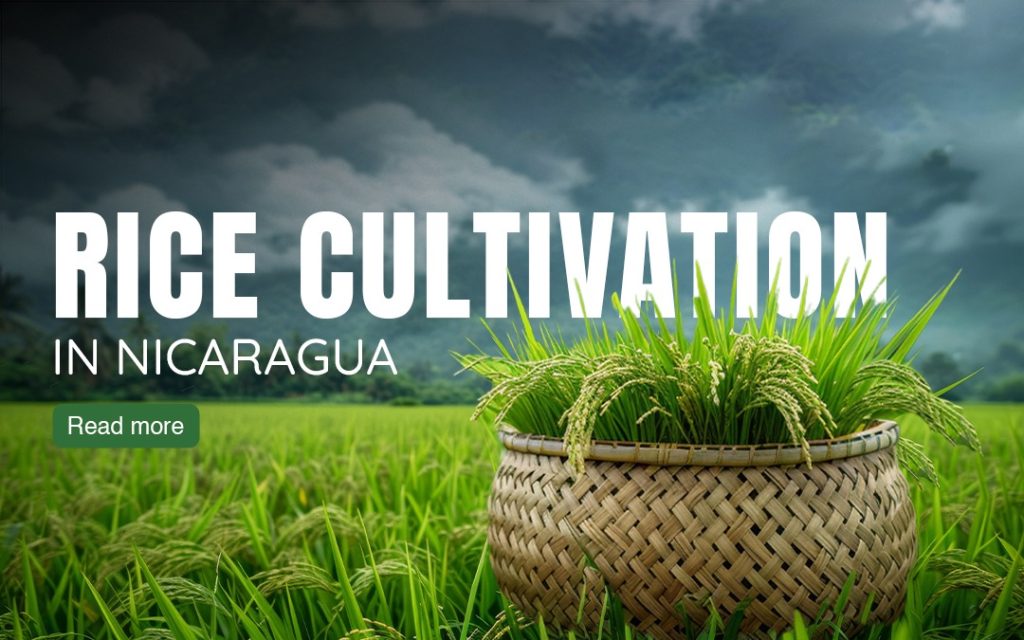
In Nicaragua, rice is a powerhouse crop, vital for both food security and the economy. Wheat, however, is a different story—while it is a staple in the Nicaraguan diet, the country’s tropical climate is generally too warm and humid for commercial wheat production, which thrives in cooler, temperate zones.
Nicaragua is a rising star in Central American agriculture. While the country is famous for its coffee and volcanic soil, rice is a critical dietary staple and an economic engine. Currently, Nicaragua produces enough rice to cover about 70–75% of its national demand, with the departments of Matagalpa, Granada, and Rivas leading the charge.
Step-by-Step Rice Cultivation in Nicaragua
1. Varietal Selection & Timing
In Nicaragua, timing is everything. The agricultural cycle is divided into two main periods:
- The Main Crop: Planted Jan–March (harvested April–July).
- The Second Crop: Planted July–October (harvested Nov–Dec).
- Varieties: Look for high-yield, disease-resistant seeds like ANAR 2006, INTA Dorado, or the drought-tolerant INTA Secano Precoz.
2. Land Preparation
The goal is to create a level, nutrient-rich bed.
- Plowing: Deep plowing (10 cm) 3–6 weeks before planting helps incorporate weeds and old stubble.
- Laser Leveling: In advanced regions like Sébaco, farmers use laser technology to level fields. This reduces water waste by up to 50% and ensures uniform growth.
- Bund Construction: For irrigated rice, construct levees (bunds) at least 0.5 meters high to manage water levels effectively.
3. Sowing Methods
Nicaraguan farmers typically use one of two methods:
- Direct Seeding: Common in mechanized farms. Seeds are broadcast at roughly 100 kg/ha.
- Transplanting: Seedlings are grown in a nursery for 21–30 days and then moved to puddled, flooded fields. This method is labor-intensive but results in fewer weeds.
4. Integrated Water Management
Since 70% of Nicaraguan rice is irrigated, water management is the most critical step.
- Flooding: Maintain a water depth of 2–5 cm during the vegetative stage.
- Drainage: Gradually drain the field 10–15 days before harvest to allow the soil to firm up for machinery.
5. Fertilization & Crop Care
- Basal Dose: Apply phosphorus and potassium at planting.
- Nitrogen Top-Dressing: Split applications of Urea are typical during the tillering and panicle initiation stages to boost grain weight.
- Weed Control: Nicaragua faces challenges with “weedy rice” (red rice). Early weeding within the first 21 days is vital.
In summary, while rice and wheat are both essential cereals, their paths in the Nicaraguan landscape are vastly different. Rice is a staple of the local economy and a triumph of tropical water management, perfectly suited to the fertile, low-lying valleys of the country. Wheat remains a climatic outlier, better suited to the cooler, drier latitudes of the north or extreme high-altitude plateaus. Understanding these differences is key to appreciating why your gallo pinto is made with local rice, while your pan de bono likely relies on imported wheat grain.