
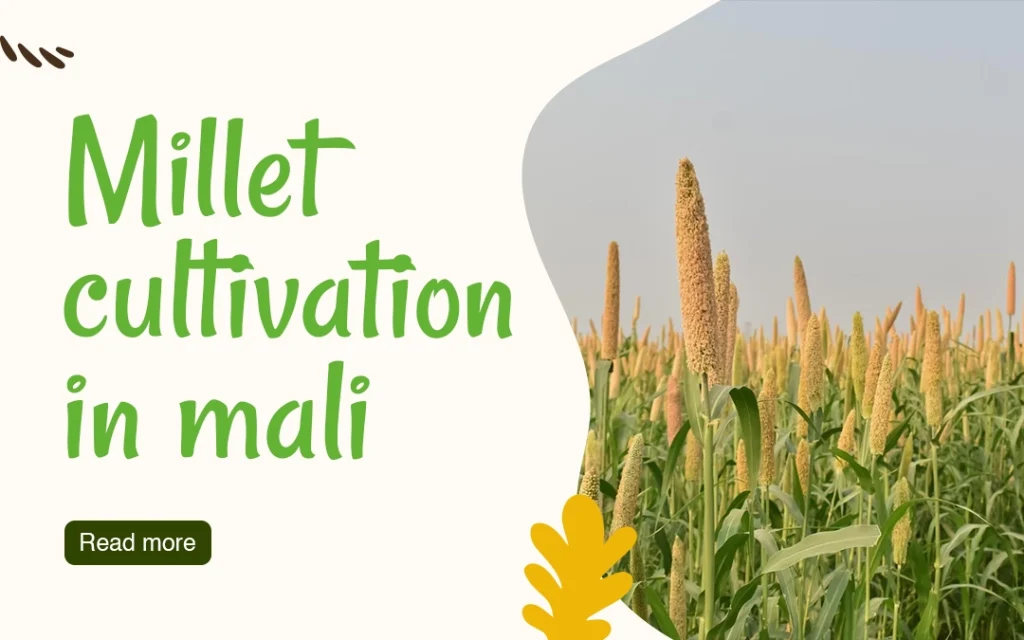
Millet cultivation in Mali plays a vital role in ensuring food security, rural livelihoods, and climate resilience. As one of the most drought-tolerant cereal crops, millet has been grown in Mali for centuries, especially across the Sahelian and Sudanian zones. This blog explores millet farming in Mali in detail, covering climate conditions, soil requirements, cultivation methods, harvesting, challenges, and future opportunities—optimized to rank for millet cultivation–related searches.
Importance of Millet in Mali’s Agriculture
Millet is a staple food for millions of people in Mali. It is used to prepare traditional dishes such as tô, porridge, and fermented foods. Compared to maize or rice, millet requires fewer inputs and performs well under erratic rainfall, making it ideal for Mali’s semi-arid regions.
Key reasons millet is widely cultivated in Mali
- High tolerance to drought and heat
- Low fertilizer and water requirements
- Adaptability to poor and sandy soils
- Long storage life, reducing post-harvest losses
Climate Conditions for Millet Cultivation in Mali
Millet thrives in Mali’s hot and dry climate. The crop is mainly grown during the rainy season, which typically lasts from June to September.
Optimal climate conditions include:
- Temperature range: 25°C to 40°C
- Annual rainfall: 300–600 mm
- High sunlight exposure throughout the growing season
The northern and central regions of Mali, where rainfall is limited and unpredictable, are particularly suitable for millet cultivation.
Soil Requirements for Millet Farming
Millet grows well in a wide range of soils, but it performs best in:
- Light sandy to sandy-loam soils
- Well-drained soils with low water retention
- Slightly acidic to neutral pH
Unlike many other cereal crops, millet can grow in soils with low fertility, making it suitable for marginal lands across Mali.
Land Preparation and Sowing Methods
Traditional farming systems dominate millet cultivation in Mali, though improved practices are slowly being adopted.
Land preparation:
- Fields are cleared at the end of the dry season
- Minimal tillage is practiced to conserve soil moisture
Sowing practices:
- Seeds are usually sown directly after the first rains
- Broadcasting or dibbling methods are commonly used
- Local millet varieties are preferred for their resilience
Early sowing is crucial to take advantage of available soil moisture and ensure good crop establishment.
Crop Management and Growth
Millet is a low-maintenance crop, but basic care significantly improves yields.
Crop management practices include:
- Thinning seedlings to reduce competition
- Manual weeding 2–3 weeks after germination
- Use of organic manure where available
Most smallholder farmers rely on traditional knowledge rather than chemical fertilizers, supporting sustainable and eco-friendly farming systems.
Pest and Disease Management
Millet in Mali faces challenges from pests and diseases, especially under changing climatic conditions.
Common issues include:
- Birds damaging grains at maturity
- Stem borers and grasshoppers
- Fungal diseases during unusually wet seasons
Farmers manage these problems using traditional methods such as early harvesting, field monitoring, and crop diversity.
Harvesting and Post-Harvest Handling
Millet is typically ready for harvest 90–120 days after sowing.
Harvesting practices:
- Panicles are cut manually using sickles
- Crops are sun-dried before threshing
Post-harvest handling:
- Grains are stored in traditional granaries
- Proper drying helps prevent mold and insect damage
Millet’s excellent storability makes it a reliable food source during dry seasons.
Challenges Facing Millet Cultivation in Mali
Despite its resilience, millet farming in Mali faces several challenges:
- Climate variability and delayed rainfall
- Limited access to improved seeds
- Low mechanization and market access
- Soil degradation in some regions
Addressing these challenges requires policy support, farmer training, and sustainable land management practices.
Future Scope of Millet Farming in Mali
With growing global interest in climate-resilient and nutritious grains, millet has strong future potential in Mali.
Opportunities include:
- Introduction of improved, high-yielding millet varieties
- Expansion into value-added millet products
- Promotion of millet as a health food crop
- Support for sustainable and organic farming systems
Millet cultivation aligns perfectly with Mali’s need for resilient agriculture in the face of climate change.
Millet cultivation in Mali is more than just farming—it is a cornerstone of food security, cultural heritage, and sustainable agriculture. With its ability to thrive under harsh climatic conditions, millet remains one of the most reliable crops for Malian farmers. Strengthening traditional knowledge with modern agricultural practices can further enhance productivity and ensure a secure future for millet farming in Mali.