
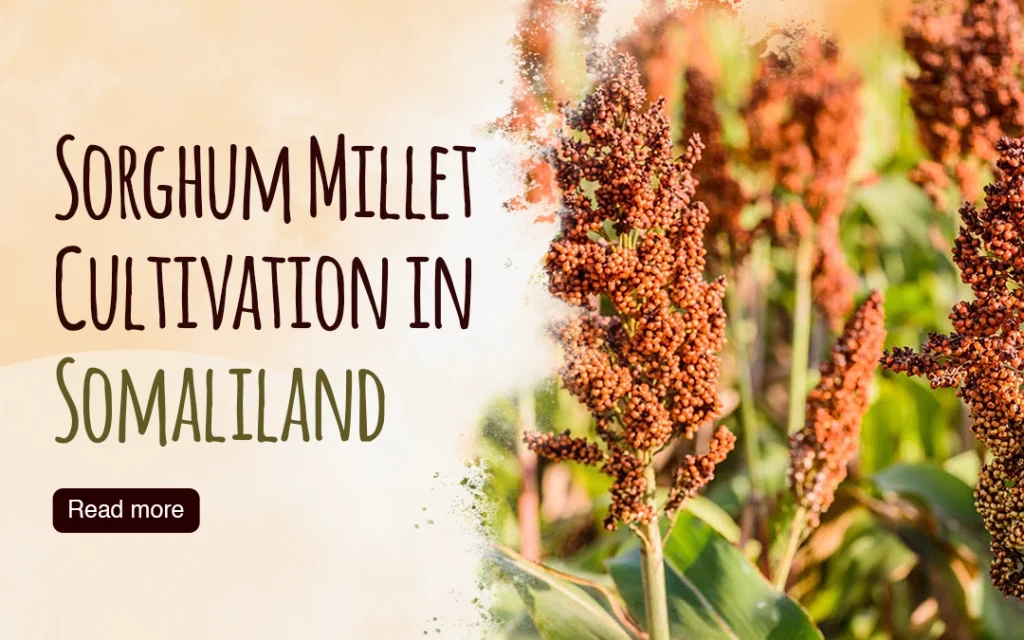
Sorghum, often referred to as Swrgam millet in local terms, is one of the most important cereal crops grown in Somaliland. Known for its ability to withstand drought, high temperatures, and poor soil conditions, sorghum plays a crucial role in ensuring food security and livelihoods for farming communities across the region.
Importance of Sorghum in Somaliland
Sorghum is the second most widely grown cereal in the Horn of Africa after maize. In Somaliland, it is a traditional staple food and is also used as animal fodder. Given the semi-arid climate, sorghum is more reliable than other cereals, making it a lifeline for rural households.
Climatic & Soil Requirements
- Climate: Sorghum thrives in hot and dry areas, tolerating long dry spells better than maize or wheat.
- Soil: It grows best in light to medium-textured soils with good drainage. Sandy loam and alluvial soils are particularly favorable.
- Rainfall: Requires 300–600 mm of rainfall, making it suitable for Somaliland’s low-rainfall regions.

Cultivation Practices
Sorghum cultivation in Somaliland begins with proper land preparation, where fields are ploughed and leveled to retain soil moisture effectively. Sowing is usually timed with the onset of the rainy seasons—April to May for the Gu rains and September to October for the Deyr rains. Farmers typically use about 8–10 kilograms of seed per hectare, planting in rows spaced 45–60 centimeters apart to ensure healthy crop growth. Fertilization is mainly done with organic manure or compost, as chemical fertilizer use remains limited in most rural areas. Timely weeding is crucial to reduce competition for nutrients and water, thereby improving yield. In regions with access to irrigation from rivers and wells, sorghum can be cultivated twice a year, making it a reliable food and fodder crop in both rain-fed and irrigated farming systems.
Harvesting & Yield
Sorghum millets generally matures within 90 to 120 days, depending on the variety cultivated. Harvesting takes place once the grains have hardened and dried, ensuring proper storage quality and reduced post-harvest losses. The yield potential varies widely, ranging from 800 kilograms to about 2 tons per hectare, largely influenced by rainfall patterns, soil fertility, and the farming practices adopted by the growers.
Uses of Sorghum in Somaliland
In Somaliland, sorghum serves multiple purposes that make it an essential crop for both households and communities. As a staple food, it is ground into flour and used to prepare porridge, flatbreads, and other traditional dishes that form a major part of the local diet. Beyond human consumption, the leaves and stalks of the plant provide valuable fodder for livestock, supporting pastoral livelihoods. Additionally, sorghum is sometimes utilized in the brewing of traditional beverages, highlighting its versatility and cultural importance in the region.
Challenges in Sorghum Production
- Erratic rainfall & droughts
- Pest infestations (stem borers, birds, and locusts)
- Limited access to improved seed varieties
- Post-harvest losses due to poor storage