
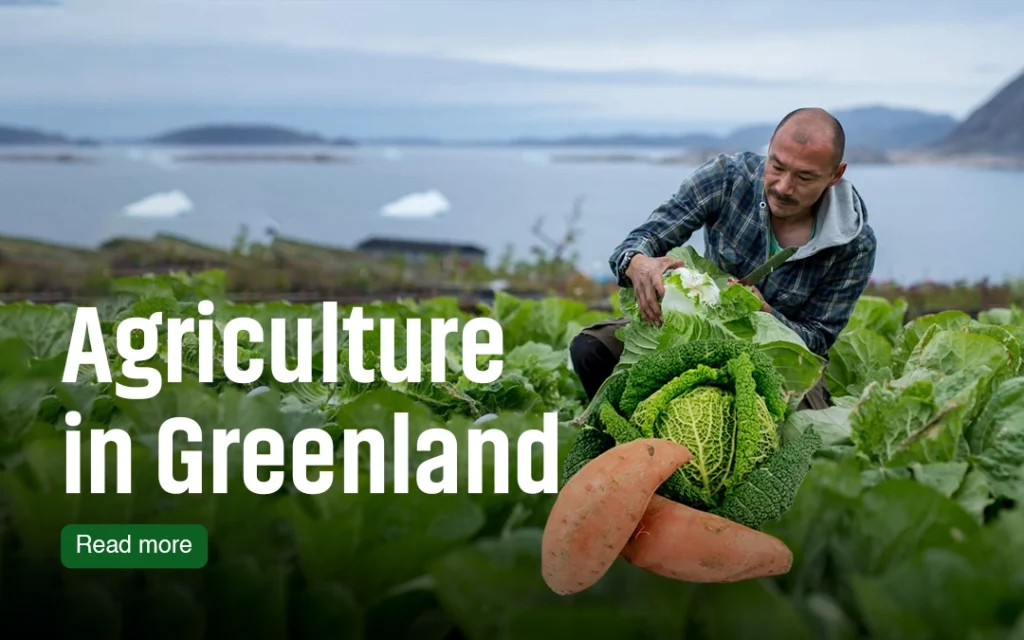
Farming in the Land of Ice
About 80% of Greenland is covered in ice, which leaves only a thin strip of land along the coast for human settlement and farming. Out of this, just around 1% is considered arable. Most agriculture takes place in South Greenland, where the summers are relatively mild, fjords create sheltered microclimates, and soil conditions are a little better.
Still, it’s no walk in the park: the growing season is very short, frost can appear any time of year, and the soil is often rocky and nutrient-poor. Farmers here need creativity, resilience, and sometimes a little help from science.
A Glimpse into History
Greenland’s farming story goes way back to the Norse (Viking) settlers around the year 985 AD. They built farms in South Greenland, raised sheep, goats, and cattle, and even grew hardy crops. But when the climate cooled during the Little Ice Age, many of these farms faded away.
Today, Greenlanders are reviving agriculture in the same region, blending traditional sheep farming with modern greenhouse technology.
What Crops Are Grown in Greenland?
So, what actually grows in this icy land?
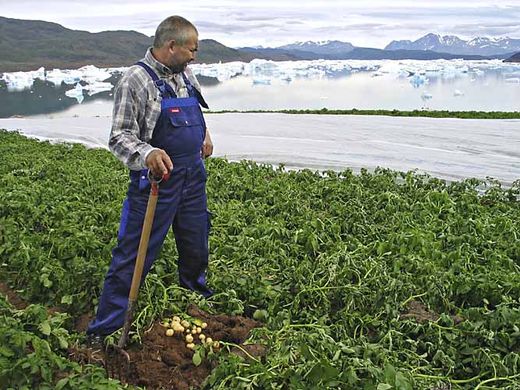
- Potatoes – One of the most successful crops, as they thrive in cool conditions.
- Vegetables – Broccoli, cabbage, lettuce, cauliflower, and carrots are increasingly common.
- Berries – Strawberries, blueberries, and crowberries grow well in summer.
- Fodder & Grasses – Essential for sheep farming, meadows are cultivated for hay and silage.
- Greenhouse Produce – Thanks to innovative projects, even cucumbers, herbs, and salad greens can be harvested year-round in places like Nuuk.
Greenland also experiments with soil improvement using glacial rock flour, which helps crops retain water and nutrients.
Climate Change: A Mixed Blessing
Warming temperatures are opening new possibilities. Longer summers mean more crops can survive, and some farmers are testing barley and other grains. However, climate change also brings unpredictable weather, new pests, and risks of drought in certain areas.
So while farming opportunities may expand, challenges won’t disappear.
The Future of Greenlandic Agriculture
Greenland’s agriculture may never rival that of Denmark or Canada, but it plays an important role in food security. Importing everything from Europe is expensive and unsustainable, so producing potatoes, vegetables, and hay locally makes a real difference.
With a mix of traditional sheep farming, modern greenhouses, and innovative soil experiments, Greenland is carving out a small but meaningful farming identity — right on the edge of the Arctic.