
To irrigate their crops, many farmers around the world rely on pumping supplies, groundwater, and adjacent water sources. It is well known that conventional agriculture uses a lot of water. Nonetheless, water conservation in agriculture has grown in significance for both environmental health and agricultural sustainability. Better-yield crops can be grown with less water by using it more efficiently, helping to protect one of nature’s most precious resources. Ten essential methods for conserving water in agriculture will be covered in this article.
1. Drip irrigation
The most effective method of giving crops the water and nutrients they need for healthy growth is drip irrigation. With this technique, water and nutrients are delivered in precisely the appropriate amounts and at the right times to each plant’s root zone. Farmers can thus use less water, fertilizer, and energy while still producing larger harvests. By applying resources precisely and strategically, drip irrigation minimizes waste and increases the effectiveness of water and fertilizer use in agriculture.
2. Capturing and storing water
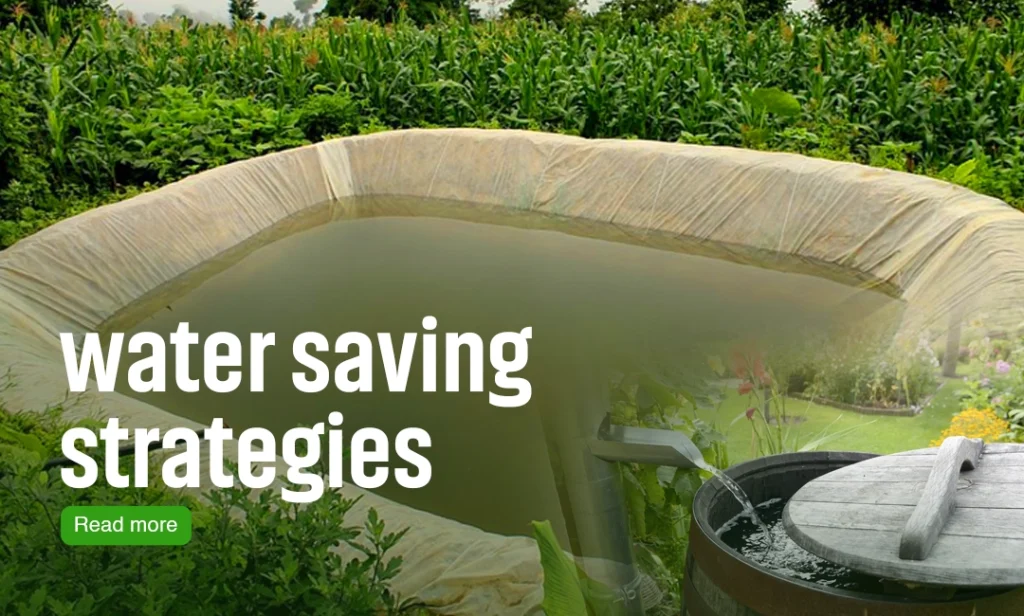
Systems for water harvesting and reuse are made to gather and hold stormwater and runoff for future use in a variety of ways. Local advantages of these systems include lowering runoff volume and halting downstream deterioration of water quality.
By encouraging water conservation, lowering dependency on freshwater sources, and repurposing collected water, they also support sustainable water management. Numerous advantages are offered by these systems, such as better water quality, less runoff, local water availability, and greater management of water resources generally.
3. Irrigation scheduling
Managers of irrigation systems use irrigation schedules to figure out how often and how long to water. In addition to the volume, timing, and frequency of water application, water management also considers the irrigation technique. Farmers keep a close eye on plant conditions, soil moisture, and weather forecasts in order to modify their irrigation schedules and avoid overwatering or underwatering their crops. In addition to preventing water waste and potential detrimental effects on plant health and productivity, this proactive strategy helps optimize water use by making sure that crops receive the proper amount of water at the right time for optimal growth.
3. Plant and Livestock Management
Crop choices and grazing methods can either increase or decrease water demand. Employing sustainable plant and livestock management is an effective way for farmers and ranchers to conserve water.
4. Rotational Grazing
Particularly in California, ranchers are frequently the first to experience the effects of drought. To maintain soil health, plant diversity, and animal output, they need to be ready for the difficulties posed by drought and make use of workable ranch management alternatives. A good management technique is rotational grazing. Grazing management makes pastures more drought-resistant by increasing the fields’ absorption of water and reducing water runoff. Better forage coverage and more soil organic matter are two further advantages that save water. Through the distribution of manure and ideal pasture species, cows receive the nutrients they require while preserving the long-term health of the grass and soil. An further advantage is that continuous grazing yields up to two tons of dry matter in fodder gathered each acre.
Digital tools are giving farmers a complete picture of their operation. Using billions of data points, farmers can prevent problems before they arise, allowing them to grow enough while using less.
Read more – Drip irrigation and sprinkler irrigation—which is best?